
Most small business owners don’t have an SEO problem. They have a time problem.
You already know you should be showing up on Google. You’ve probably read a dozen articles telling you to “optimize your content” and “build quality backlinks,” closed the tab, and gone back to running the business. Nothing changed, because none of it told you what to actually do on Monday morning.
This guide is the version we wish existed when clients call us. It covers what genuinely moves rankings for a business with one location and a modest budget, what you can do yourself, what a reasonable spend looks like, and how to tell whether hiring help is worth it. No jargon for the sake of it.
What is SEO for small business?
SEO for small business is the practice of improving your website and online presence so people searching for what you sell can find you on Google usually with a heavier emphasis on local search results, a smaller budget, and fewer people to do the work than a large company would have.
The mechanics of search engines are identical whether you’re a two-person plumbing outfit or a Fortune 500 brand. What differs is strategy. A national retailer competes for broad, high-volume terms across the country. You don’t need to. You need to be the obvious choice for people within driving distance of your front door who are ready to buy this week.
That distinction is the single most useful thing to understand about small business SEO, and it’s where most owners waste money — chasing keywords they were never going to win instead of dominating the ones that would have paid the bills.
Small business SEO vs. local SEO
These get used interchangeably, and they shouldn’t be.
Local SEO for small business is specifically about ranking in geographic searches — the Google Maps pack, “near me” queries, “dentist in Sacramento.” It applies to any business with a physical location or a defined service area, regardless of size.
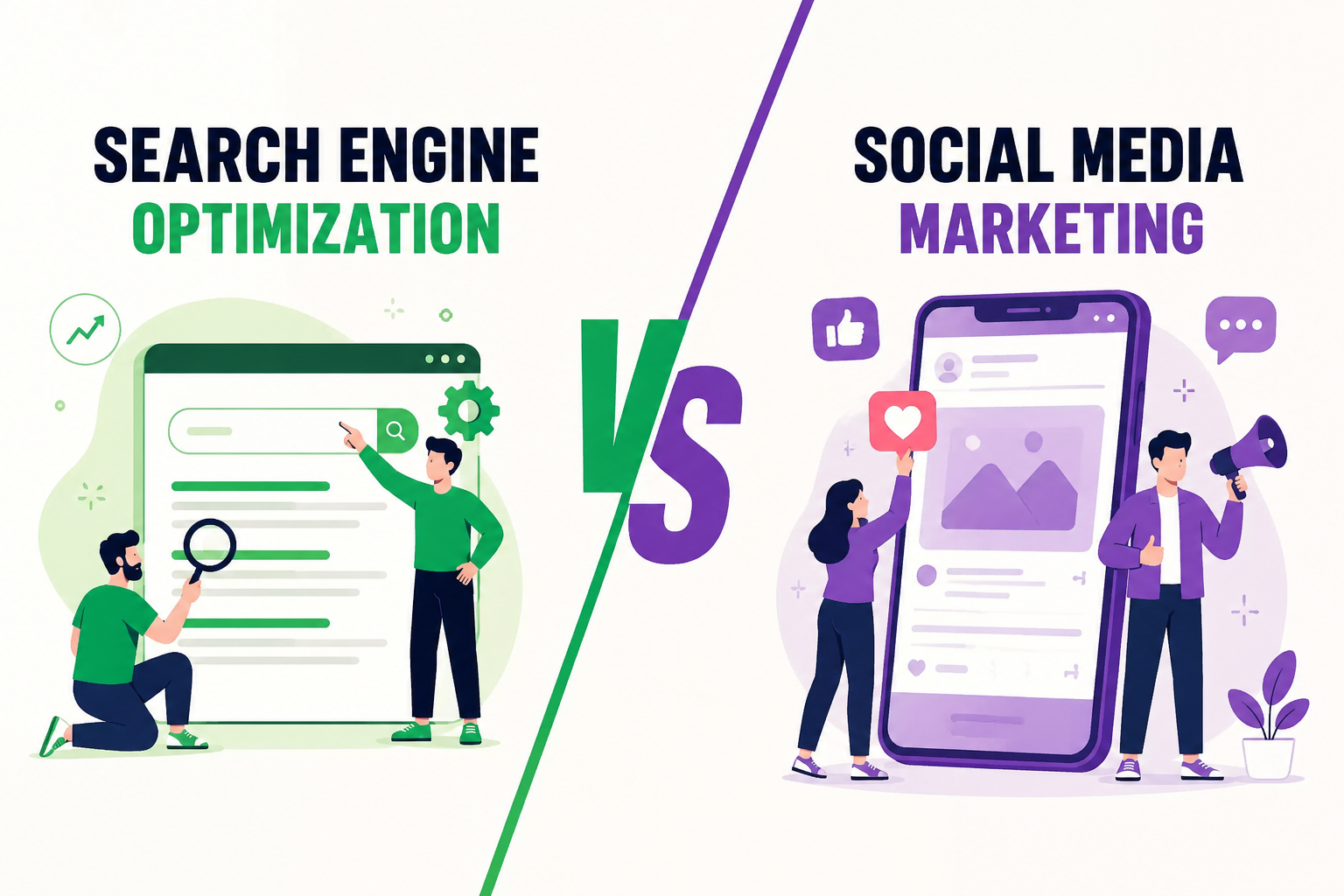
Small business SEO is broader. It covers everything you do to earn organic search visibility, including local, but also blog content, service pages, technical health, and reviews.
If you serve customers in person or travel to them, local is where the majority of your effort belongs. If you sell online to anyone anywhere, it matters far less. Most small businesses need both, weighted heavily toward local.
Why SEO matters more for small businesses than big ones
Search levels the field in a way that almost no other channel does.
Nearly half of all Google searches carry local intent, and roughly 42% of local searchers click a result in the Map Pack. Those three listings at the top of a local search sit above everything else — including paid ads in many cases, and above every national competitor with a marketing budget a hundred times yours.
That’s the asymmetry. A national chain can outspend you on Google Ads indefinitely. It cannot out-local you. It can’t accumulate 200 genuine reviews from people in your neighborhood, it can’t get written about in the local paper, and it can’t respond to a customer question at 8pm the way you can.
There’s also the economics. Paid traffic stops the moment you stop paying. Organic rankings compound the work you do this quarter keeps producing leads next year. For a business where every marketing dollar has to justify itself, that difference matters enormously.
The foundation: get these five things right first
Before you write a single blog post or chase a single backlink, these five items account for the overwhelming majority of results for a typical local business. In our experience, most small businesses that “tried SEO and it didn’t work” never actually completed this list.
1. Claim and fully complete your Google Business Profile
Your Google Business Profile is the highest-leverage asset you have. It’s the top ranking factor for the local pack, and the majority of the signals Google uses to rank Maps results come from the profile itself.
Fill in every field. Not most of them — every one. Primary category (be specific: “Emergency Plumber” beats “Plumber” if that’s your core service), secondary categories, full service list, hours including holiday hours, business description, and attributes.
Then add photos. Real ones, of your actual premises, team, and finished work. Target two to four new photos a month rather than uploading fifty once and never returning. Google weights recent activity.
Finally, seed your Q&A section with the questions customers genuinely ask — pricing range, service areas, parking, payment methods — and answer them properly. Almost nobody does this, which is exactly why it’s worth doing.
2. Fix your name, address, and phone number everywhere
Your business name, address, and phone number need to match exactly across every site they appear on. Not roughly, exactly. “Suite 4” on one and “Ste. 4” on another creates ambiguity, and ambiguity costs you tie-breaks against competitors.
Focus on the platforms that carry weight: Google, Apple Maps, Bing Places, Yelp, Facebook, and the directories specific to your industry. Fifteen accurate listings on authoritative sites will do more for you than two hundred on low-quality ones.
This matters most if you’ve moved, rebranded, or changed your number in the last few years. Old details linger online for a surprisingly long time.
3. Build a review system, not a review push
Reviews are where small businesses leave the most on the table — not because owners don’t know reviews matter, but because they treat them as something that happens rather than something they build.
Around 87% of consumers won’t consider a business rated below 4.0 stars. Below that line, your ranking barely matters, because you’ve been eliminated before you’re considered.
Three patterns consistently outperform:
- Steady velocity. A handful of reviews every month beats fifty in one week followed by silence. Recency is a real signal — a business with 200 reviews from three years ago can be outranked by one with 80 from the last six months.
- Detailed content. Reviews that mention the specific service and neighborhood carry more relevance weight than “great service.” You can’t script customers, but you can ask a specific question after the job that prompts a specific answer.
- Owner responses. Reply to all of them, good and bad. It signals an active business to Google and an accountable one to the person reading.
Build it into your workflow. Every completed job, every closed file, every discharged patient gets a follow-up. Automate the request where it’s appropriate to do so.
4. Make sure your website works on a phone
Most local searches happen on mobile, often while the person is standing somewhere deciding where to go. If your site takes six seconds to load, they’re gone before they’ve seen your name.
Test it honestly on your own phone, on cellular rather than office wifi. Can you find the phone number in under three seconds? Does tapping it start a call? Is your address linked to Maps? Are your hours visible without scrolling past three sections of stock photography?
These sound trivially basic. They’re also the reason a large share of local sites underperform.
5. Give every service and every location its own page
If you offer four services, you need four pages — not one page listing all four. If you serve three cities, you need three pages.
Google can only rank a page for what that page is clearly about. A single “Our Services” page listing everything is about nothing in particular, and it will lose to a competitor with a dedicated, substantive page on each.
The same holds geographically. A contractor working across San Diego and Chula Vista should have a real page for each — with genuinely different content, local specifics, and relevant projects. “We serve all of Southern California” is not a location strategy.
Local SEO for small business: the part that actually drives calls
Once the foundation is solid, local is where the return concentrates.
The local algorithm weighs three things: relevance (how well you match the search), distance (how close you are to the searcher), and prominence (how well known and trusted you appear). You can’t change your address, but you have real influence over the other two.
Relevance comes from your categories, your service list, and the content on your site reinforcing what your profile claims. If your profile says you’re a pediatric dentist and your website talks only about general dentistry, you’ve created a mismatch that costs you.
Prominence comes from reviews, local backlinks, citations, and mentions. This is the slowest to build and the hardest for a competitor to copy, which is precisely why it’s the most durable advantage available to you.
Practical local moves that punch above their weight:
- Get listed with your chamber of commerce and any local business association
- Sponsor something small and local that publishes a sponsor page with a link
- Get quoted in a local publication reporters need sources, and small business owners are underused ones
- Publish content about your actual area, not generic advice with a city name pasted in
- Keep your profile active with weekly posts
None of these require a large budget. All of them require consistency, which is the real barrier.
How to pick ones you can actually win
The instinct is to target the biggest term in your industry. Resist it.
Broad head terms are contested by companies with a decade of authority and a full-time team. You’ll spend two years not ranking. Instead, go narrow and specific — longer phrases with clear intent and less competition.
Someone searching “plumber” might be writing a school project. Someone searching “emergency plumber open now Fresno” is going to call somebody in the next ten minutes. The second query has a fraction of the volume and several times the value.
A simple way to build your list without paid tools:
- Write down every service you offer, in the words customers use rather than industry terms
- Add your city and your neighborhoods to each
- Type each into Google and note the autocomplete suggestions
- Scroll to “People also ask” and “Related searches” and take everything relevant
- Check what your three closest competitors have as page titles
That will give you more than enough to work with for a year. Assign one primary term per page and write genuinely for the person searching it.
Optimizing for AI search: what changed in 2026
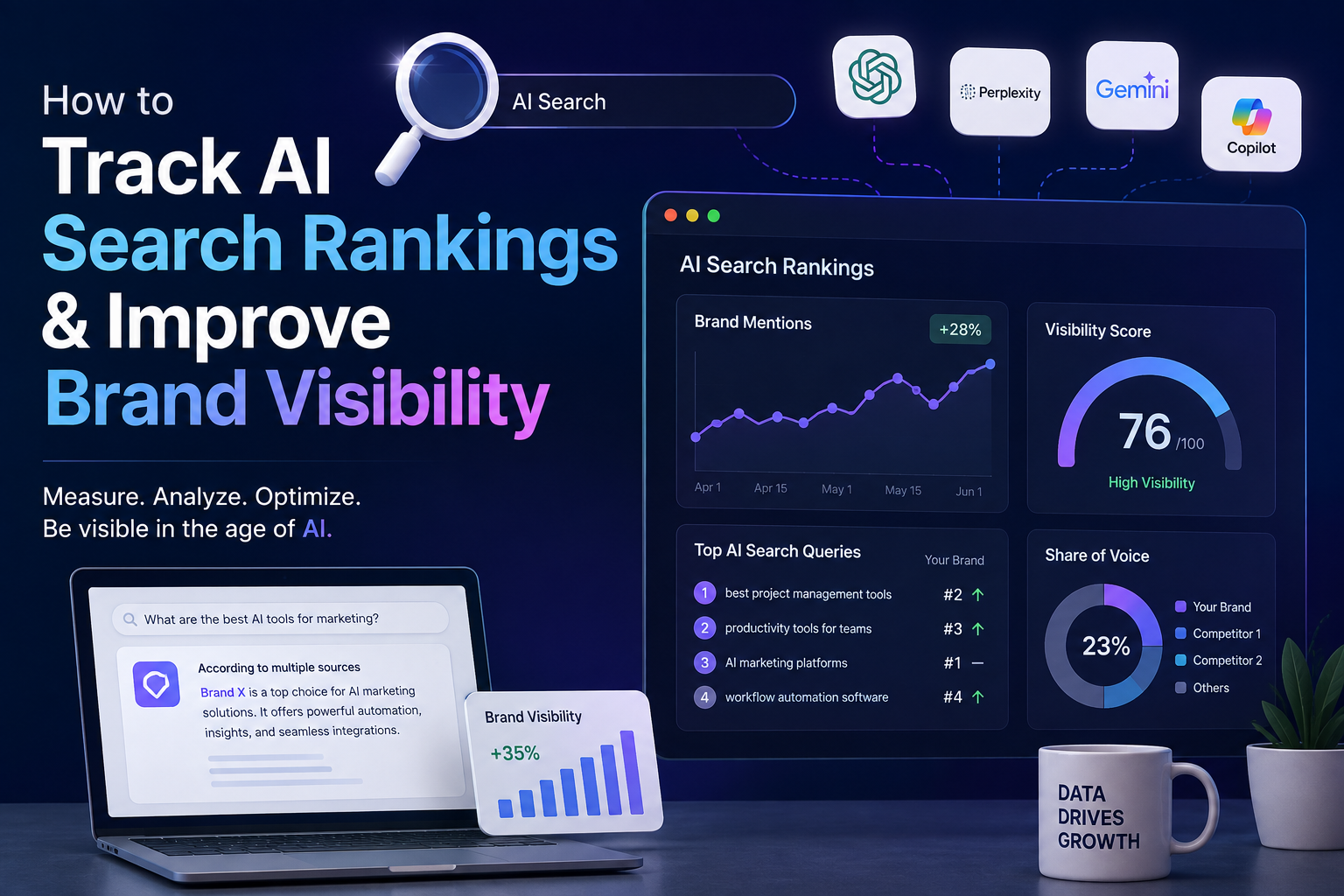
Search results increasingly include an AI-generated answer above the organic listings, and a growing share of people now ask ChatGPT, Perplexity, or Gemini for recommendations instead of running a traditional search at all.
This does not make the fundamentals obsolete. It makes them more important, because AI systems draw from the same authority signals — reviews across multiple platforms, consistent business data, mentions in credible publications, content that clearly answers a question.
What does change is format. Content that gets cited by AI tends to share certain traits:
- A direct answer immediately after the question, in a couple of sentences, before the elaboration
- Clear, descriptive headings that state what the section covers
- Structured data — FAQ and LocalBusiness schema so machines can parse your information
- Specific, attributable facts rather than vague claims
- Named authors with real credentials, because trust signals matter to AI systems as much as to Google
Write the way you’d answer a customer who asked you directly, then add the detail underneath. That format serves both a human reader and a machine trying to extract an answer.
What SEO costs, and when to hire
What a realistic budget looks like
Doing it yourself costs time rather than money — realistically five to ten hours a month once you’re past the initial setup, which is heavier.
Hiring varies widely. Freelancers typically fall in the several-hundred-to-low-thousands range monthly. Agencies generally start around $1,000–$2,500 a month for local work and climb from there with the competitiveness of your market and the number of locations involved.
Be cautious with anything advertised at $200 a month. Genuinely affordable SEO services for small business owners exist and they’re worth finding but affordable means efficient scope and honest pricing, not a package where nobody is actually doing the work. At the very bottom of the market you’re usually buying automated directory submissions and a monthly report showing traffic from countries you don’t serve.
Ask any provider three questions: what specifically will you do in month one, who does the work, and can I see results for a business like mine. Vague answers to any of those tell you what you need to know.
DIY or hire?
Do it yourself if you have one location, a small number of services, competition that’s fairly light, and a few hours a month to spare. The foundational items in this guide are genuinely achievable without professional help, and plenty of businesses get all the leads they can handle doing exactly that.
Look for help if you operate in a dense market like Los Angeles or the Bay Area, run multiple locations, sell in a high-value category where a single customer justifies months of fees, have been at it for six months with nothing to show, or simply don’t have the hours.
Good SEO services for small businesses should feel like a partnership where you understand what’s happening and why. If you can’t explain to your spouse what you’re paying for, that’s a problem regardless of the invoice size.
How long before it works
Most local businesses see meaningful movement in three to six months, with substantial results at six to twelve.
Some things move faster — fixing your categories, cleaning up inconsistent listings, and completing your profile can shift local rankings within weeks. Reviews and authority compound slowly and can’t be rushed without risk.
Anyone promising page one in thirty days is either misunderstanding the timeline or selling something that will eventually cost you.
Your 90-day plan
Month one – foundation. Claim and fully complete your Google Business Profile. Audit and correct your business details across major directories. Set up Google Search Console. Fix anything broken on mobile.
Month two – structure. Build a dedicated page for each service and each location. Write real titles and descriptions for every page. Start the review request process with every customer.
Month three – momentum. Publish content answering the questions customers ask you most. Get two or three local links. Post to your profile weekly. Check Search Console for what you’re already ranking for and improve those pages first.
Then repeat months two and three indefinitely. That’s genuinely the whole thing. SEO rewards the businesses that keep showing up over the ones that optimize once and disappear.
Frequently asked questions
Is SEO worth it for a small business?
For most local businesses, yes. Organic search reaches people who are actively looking for what you sell, and unlike paid advertising the results compound rather than stopping when you stop paying. It’s most valuable if you serve a defined geographic area, if customers research before buying, or if your customer lifetime value is high enough that a handful of extra leads a month covers the investment several times over. It’s a weaker fit if you sell an impulse product with almost no search demand.
How much should a small business spend on SEO?
Most small businesses working with a professional spend between $1,000 and $2,500 a month for local work, with costs rising in competitive markets or with multiple locations. Doing it yourself costs time instead — around five to ten hours monthly after setup. A reasonable rule is to spend what one new customer is worth to you, since even modest local SEO results typically produce more than one.
How long does SEO take to work for a small business?
Expect early movement in three to six months and substantial results in six to twelve. Technical fixes and profile improvements can register within weeks, while reviews, links, and content authority build gradually. Competitive markets like Los Angeles and San Francisco take longer than less saturated ones.
Can I do SEO myself, or do I need to hire someone?
You can absolutely do the fundamentals yourself — completing your Google Business Profile, fixing your business listings, requesting reviews, and building proper service pages are all achievable without professional help, and they account for most of the results for a typical local business. Hiring makes sense when your market is highly competitive, when you run multiple locations, or when you don’t have the hours to maintain it consistently.
What’s the difference between small business SEO and local SEO?
Local SEO focuses specifically on geographic searches — Google Maps results, “near me” queries, and city-based terms — and applies to any business with a physical location or service area. Small business SEO is broader, covering all organic search work including local, content, technical health, and reviews. Most small businesses need both, weighted toward local.
How do I get my small business to show up on Google Maps?
Claim and verify your Google Business Profile, choose the most specific primary category available, complete every field including photos and services, make sure your name, address, and phone match everywhere they appear online, and build a steady flow of recent reviews. Ranking also depends on the searcher’s distance from you, so proximity plays a role you can’t fully control.
How many keywords should a small business target?
Start with one primary term per page rather than a total target. A typical local business with five services in two cities might reasonably work with 20 to 40 terms across the site. Specific, lower-volume phrases with clear buying intent will outperform a smaller number of broad, heavily contested ones.
Do I need to blog for SEO to work?
Not initially. If your profile is incomplete, your listings are inconsistent, and you have twelve reviews, blogging is the wrong priority — fix the foundation first. Content becomes valuable once the basics are solid, particularly for answering the questions customers ask before they buy and for building the topical authority that helps you appear in AI-generated answers.
Are cheap SEO packages worth it?
Affordable providers can deliver real value when the scope is narrow and honest. Be wary at the very low end, where packages often consist of automated directory submissions and reporting on traffic that will never convert. Before committing, ask what specifically happens in month one, who performs the work, and whether they can show results for a comparable business.
Where to go from here
The businesses that win at search aren’t the ones with the cleverest tactics. They’re the ones that completed the boring foundational work and then kept at it while competitors lost interest around month four.
If you’d rather know exactly where you stand before deciding what to do next, we’ll run a free audit of your site and local presence and send you the honest version — what’s working, what’s holding you back, and what it would realistically take to compete in your market.
No commitment, no sales pressure. Delivered in 48 hours.
About SEOCALI: We’re a California-based SEO agency built for local businesses. Since 2011 we’ve worked with 250+ businesses across 30+ industries on local search, technical SEO, and content. White-hat only, month-to-month, no lock-in contracts.