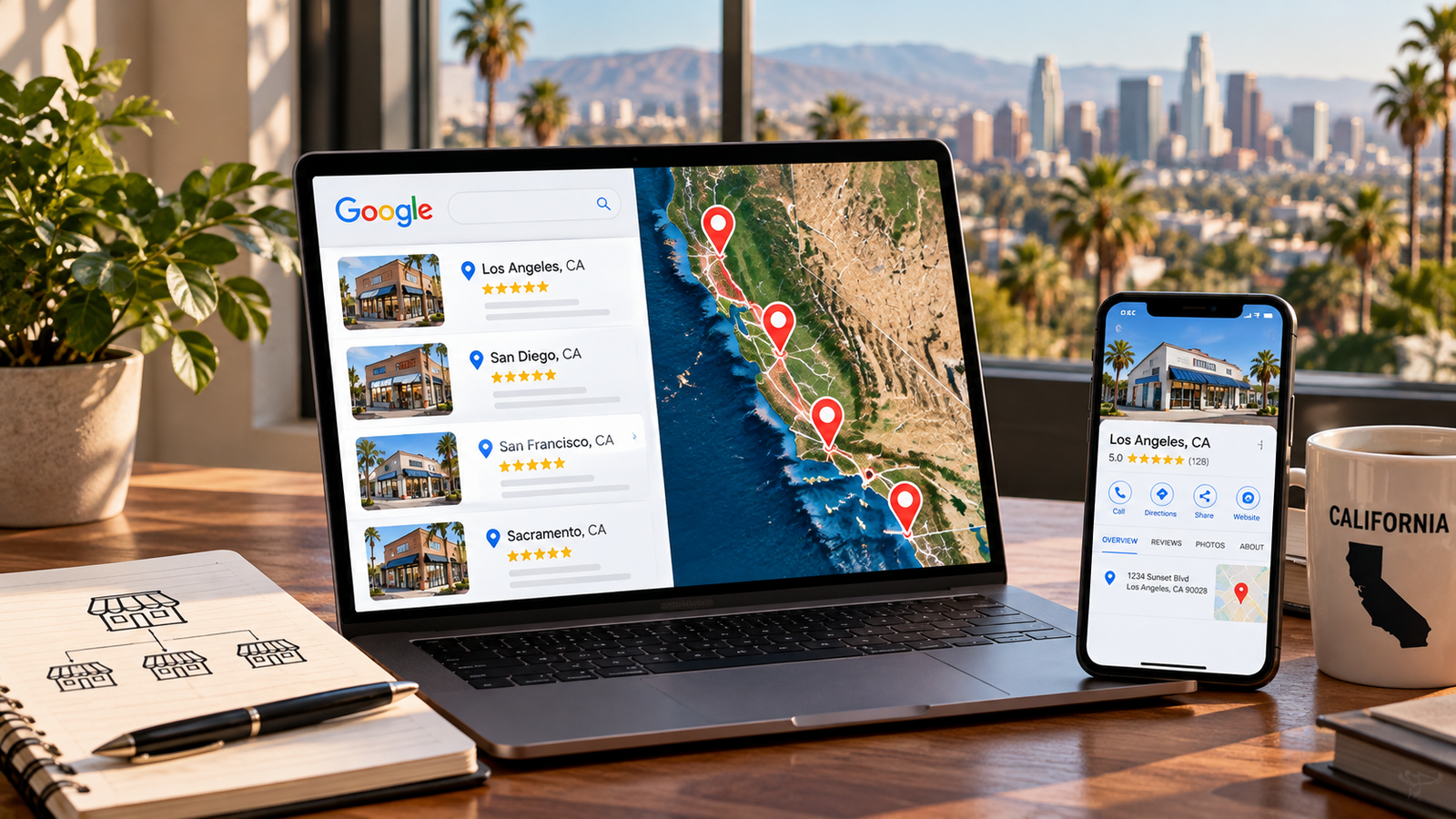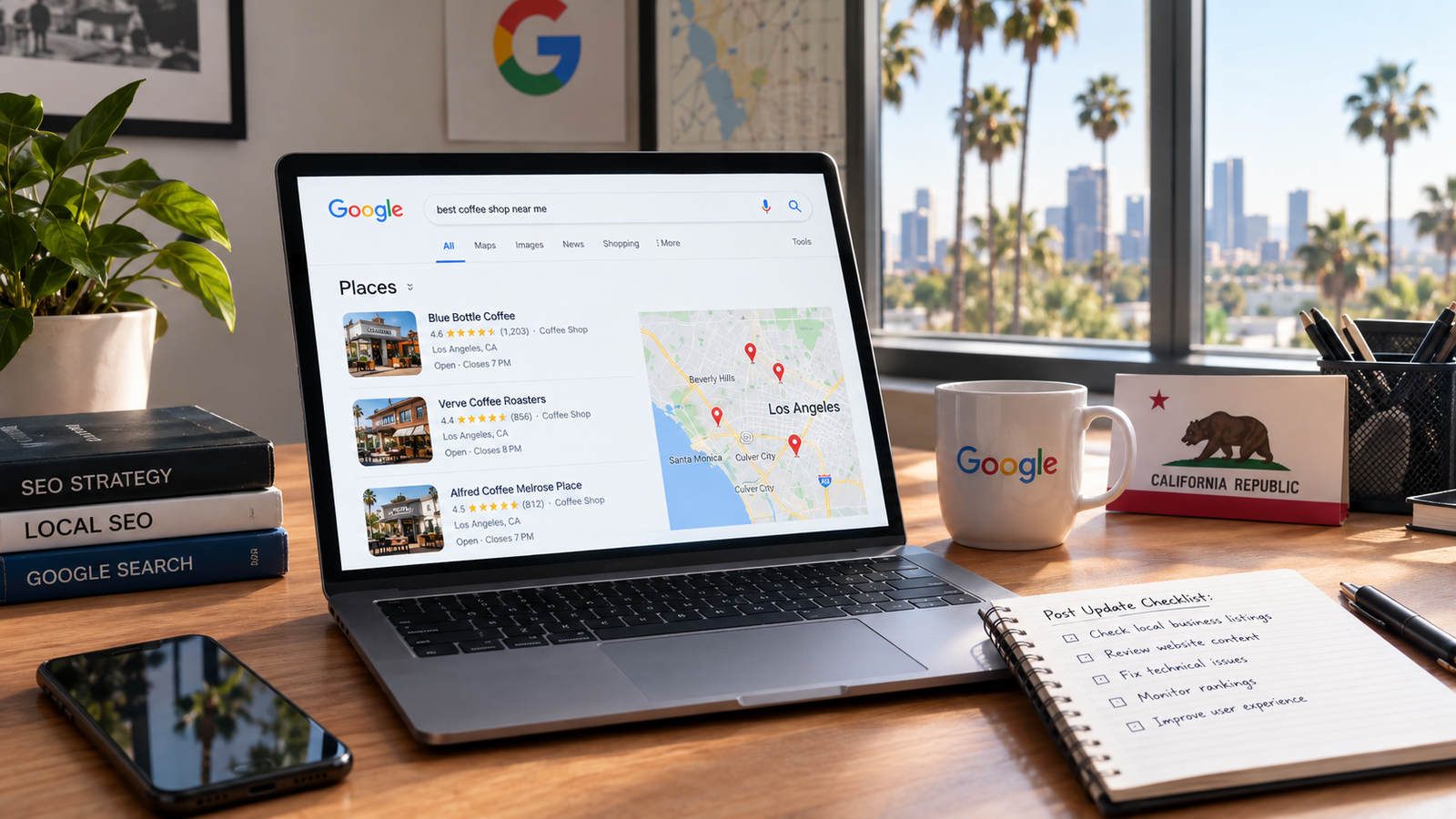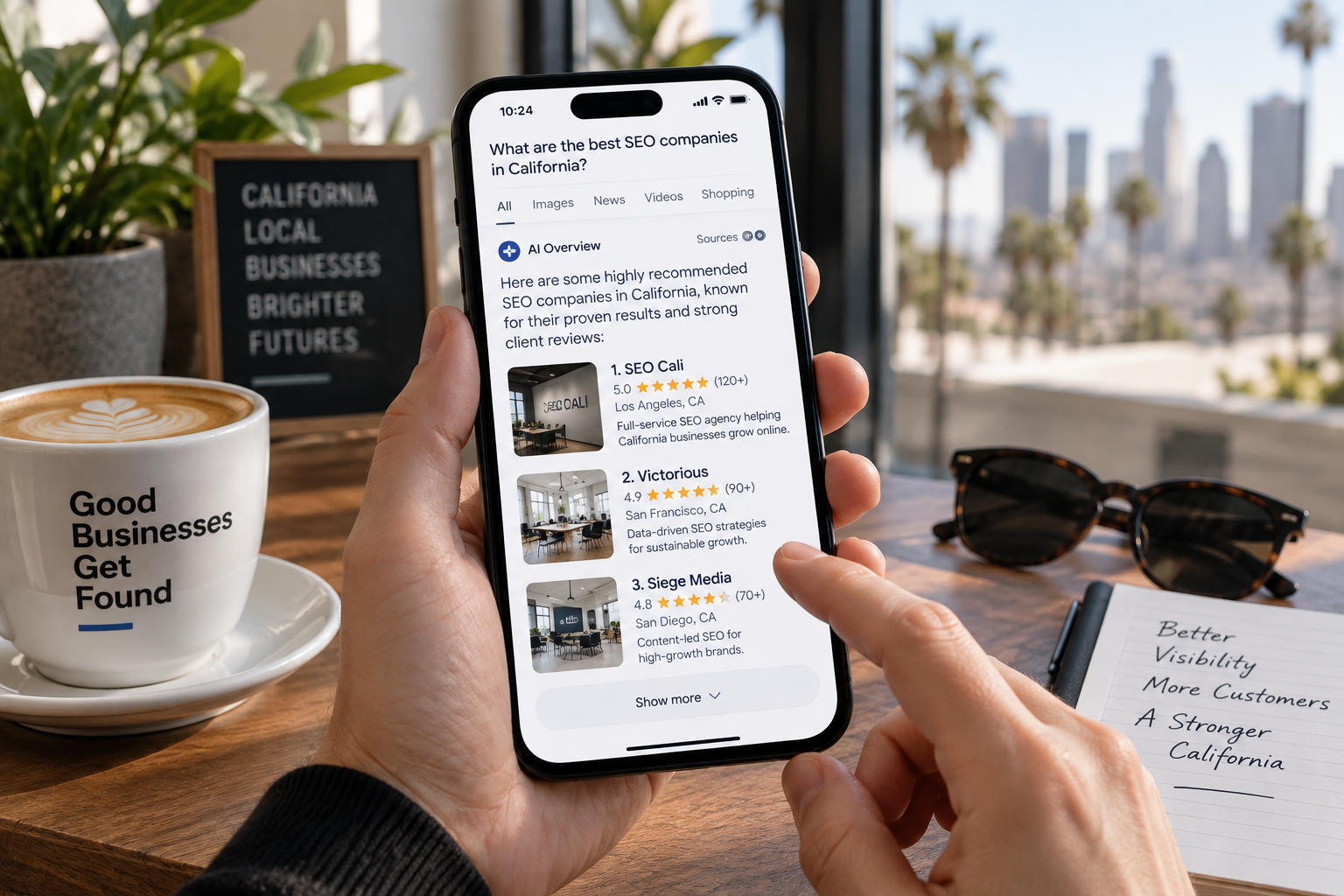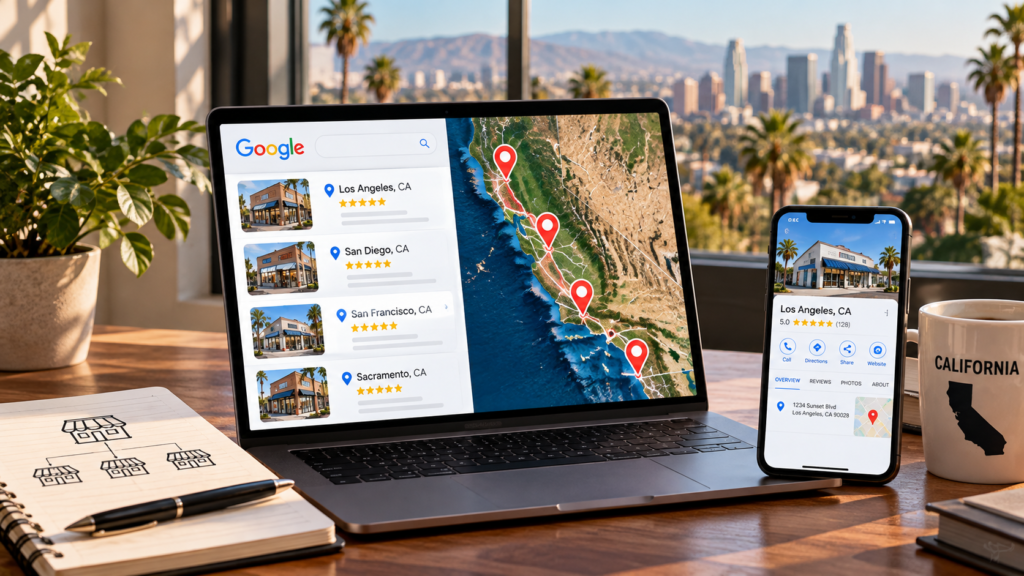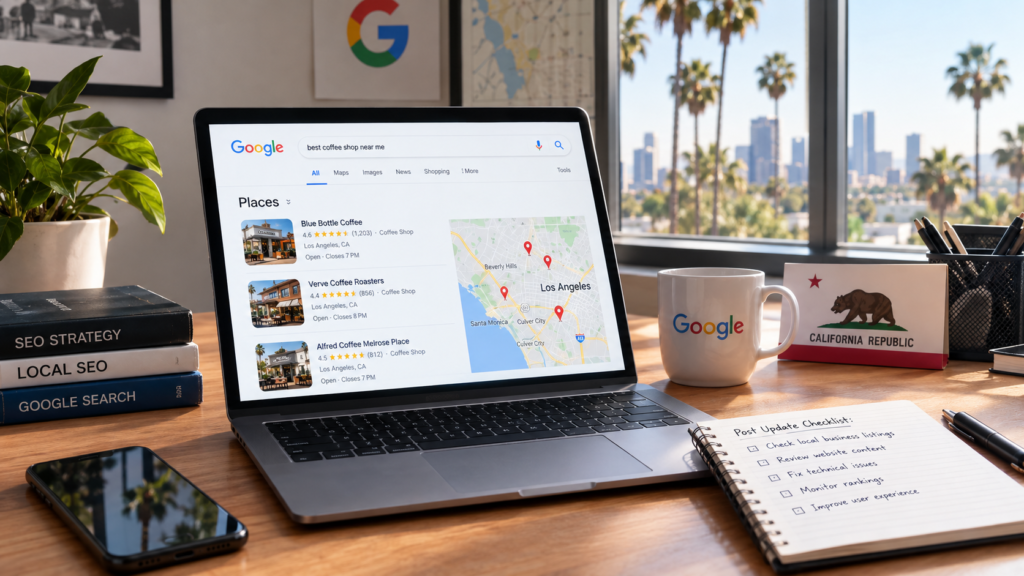


Ask a dentist in Sacramento or a plumber in Fresno where their last five customers came from, and you’ll usually hear the same answer. Google. Not a billboard, not a mailer, not a flyer on a coffee shop wall. Somebody pulled out a phone, typed “near me,” and picked one of the first three businesses on the map.
That map pack is the whole game for small businesses in California. And the good news is that you don’t need a national ad budget to win it. Local SEO for small businesses runs on details, consistency, and doing the boring stuff better than the shop down the street.
We’ve been doing this from California since 2011, across 250+ local businesses and 30+ industries. Here’s what actually works in 2026, minus the fluff.
What Local SEO Actually Means
Local SEO is how you show up when someone nearby searches for what you sell. Three things carry most of the weight:
- Your Google Business Profile. This is what feeds the map pack. It matters more than your homepage for most local searches.
- Your website. Google reads it to figure out what you do and where you do it.
- Your reputation and mentions around the web. Reviews, directory listings, local news, other sites talking about you.
Regular SEO tries to rank a page. Local search optimization tries to make Google confident that your business is a real, active, trusted option in a specific place. Different job, different playbook.
Why 2026 Changed the Rules
Two things shifted, and a lot of small business owners haven’t caught up yet.
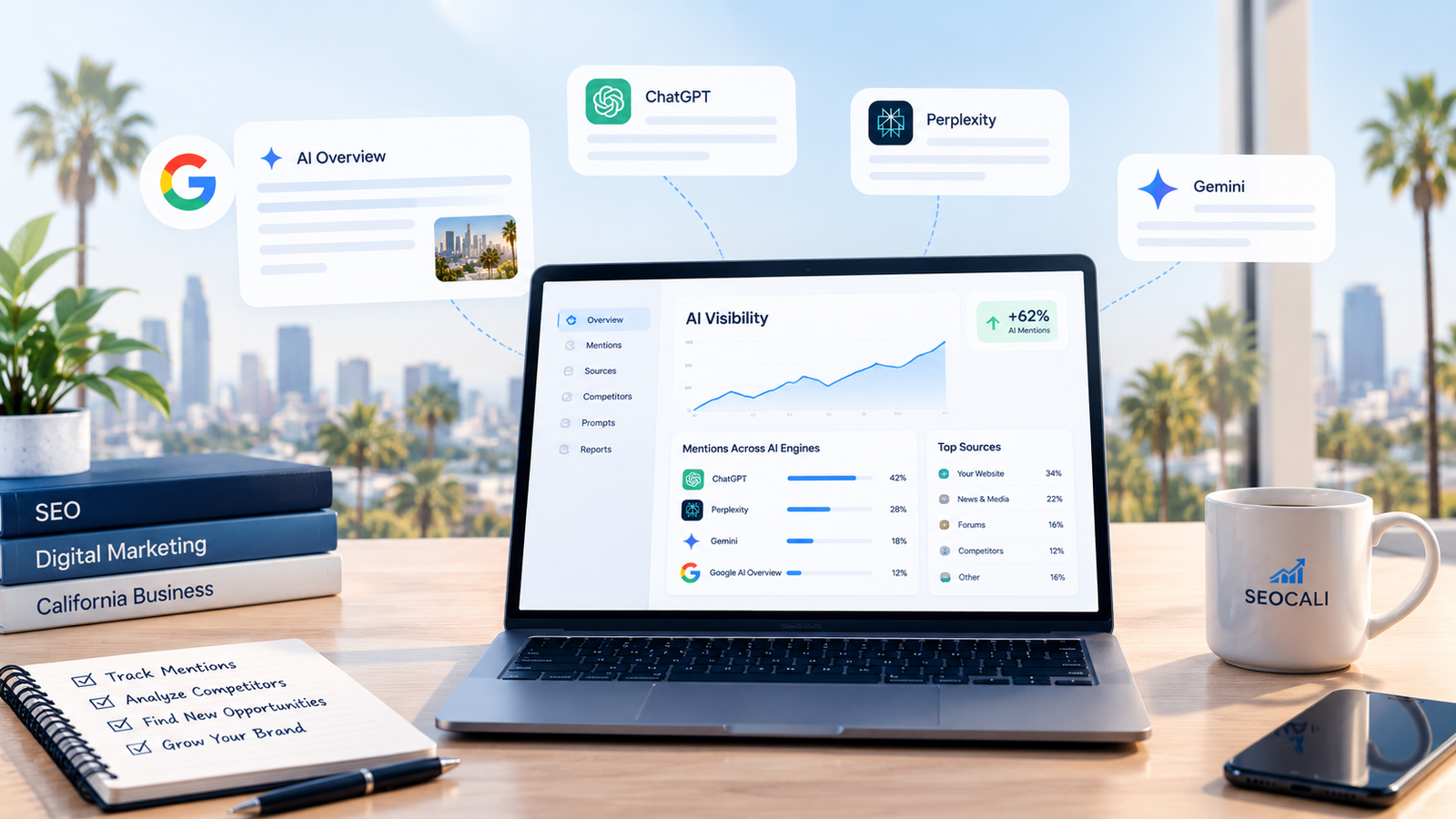
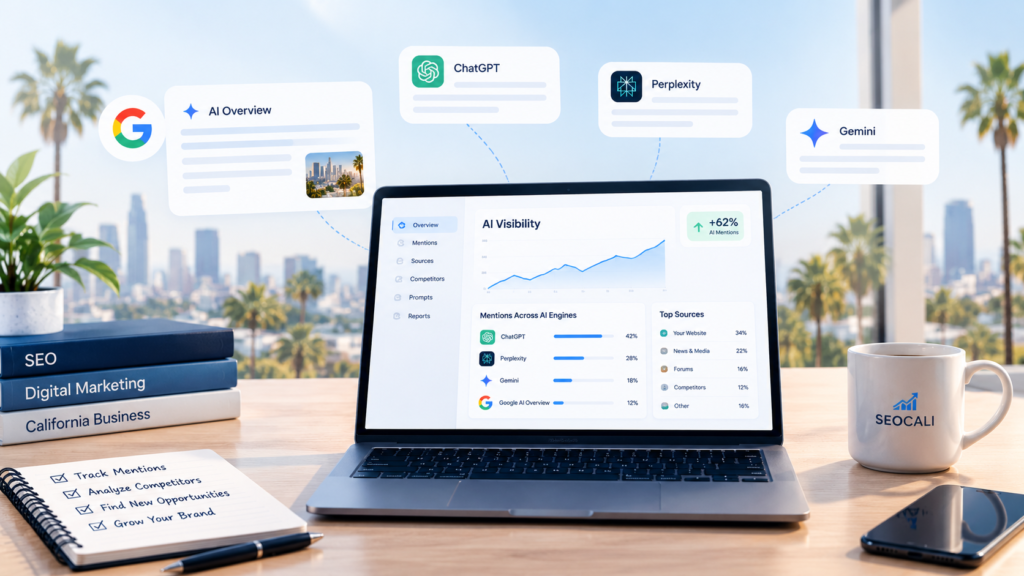
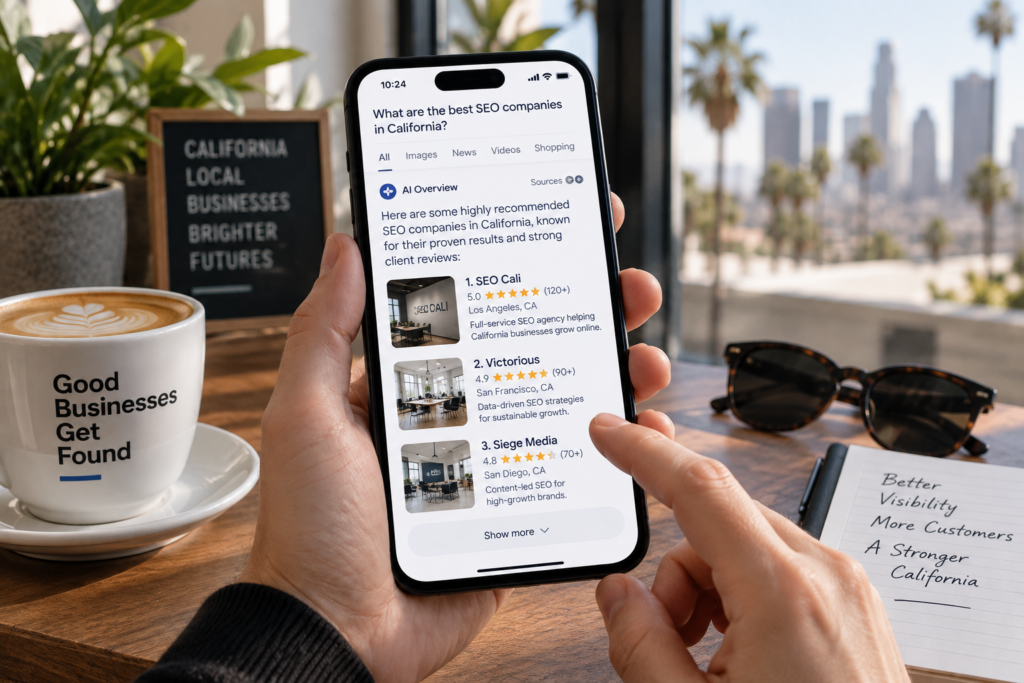
First, AI answers. Google’s AI Overviews, ChatGPT, Perplexity, and Gemini now hand people a direct answer instead of ten blue links. Those systems pull from sources they trust. If your business isn’t in that pool, you lose the click before the ranking even matters.
Second, searches got longer and more conversational. People speak to their phones now. “Who does same day AC repair in Riverside on a Sunday” is a real query. Short keyword pages don’t answer that. Pages written like a helpful human do.
Neither of these kills traditional local SEO. They stack on top of it. The businesses with clean profiles, real reviews, and clear content are the same ones getting cited by AI tools.
Step 1: Fix Your Google Business Profile First
If you only have one weekend to spend on this, spend it here. It’s the highest return work in local SEO for small business, and most competitors do it halfway.
Get the basics right
- Pick the most specific primary category you can. “Personal injury attorney” beats “lawyer.”
- Use your real business name. No keyword stuffing. Google suspends profiles for that.
- Match your name, address, and phone number exactly to what’s on your website.
- Set real hours, including holiday hours. Wrong hours cost you calls and hurt trust.
- Add the service areas you genuinely cover, not every city in the county.
Then go past the basics
- Upload real photos every month. Your team, your shop, your work, your van. Stock photos do nothing.
- Fill out every service and product with a short honest description.
- Post updates two to four times a month. Offers, jobs you finished, seasonal reminders.
- Answer the Q&A section yourself. Ask a customer to post the question you hear most, then answer it clearly.
We’ve watched a Sacramento dental clinic go from invisible to the top of Google Maps in about four months with this kind of consistent profile work paired with local content. Nothing clever. Just done properly and done every week.
Step 2: Build Pages That Match How People Search
Here’s a mistake we see constantly. One page called “Services” listing twelve things, covering five cities. Google can’t rank that for anything specific.
Build it out instead:
- One page per core service, written in plain language a customer would use.
- One page per city or neighborhood you actively serve, with genuinely different content on each.
- A clear contact page with your address, phone, hours, and an embedded map.
The city pages are where people cut corners. Swapping “Long Beach” for “Anaheim” in the same paragraph fools nobody. Write about the actual jobs you do there, the local landmarks near your service radius, the permits or rules that apply in that area, the response times you can promise. That’s the difference between a page that ranks and a page that sits on the third page forever.
Step 3: Earn Reviews Without Being Weird About It
Reviews influence rankings and they decide clicks. Someone comparing two contractors with the same rating will pick the one with 80 reviews over the one with 9.
What works:
- Ask in person, right after you finish good work. That’s the moment people say yes.
- Send a short text with a direct link to your review form. Not a paragraph.
- Reply to every review, good and bad, within a couple of days.
- Handle bad reviews calmly and factually. Future customers read your reply more closely than the complaint.
What to avoid: buying reviews, offering discounts for them, or asking staff to post fake ones. California businesses get caught on this regularly, and losing a profile is a lot more expensive than a slow month of reviews.
Step 4: Clean Up Your Citations
Your business is probably listed on dozens of sites you’ve never visited. Yelp, Apple Maps, Bing Places, Angi, Nextdoor, industry directories, old chamber of commerce pages.
Half of them likely have your old suite number or a disconnected phone line. Every mismatch is a small dent in Google’s confidence. Pick your top 20 to 30 listings, fix them so they match your profile exactly, and check them twice a year. It isn’t exciting work. It moves rankings.
Step 5: Don’t Ignore the Technical Side
Your local SEO strategy falls apart if the site itself is slow or broken.
- Make it fast on a phone on cellular data, not on your office wifi.
- Add Local Business schema markup so search engines and AI tools read your details cleanly.
- Put your phone number where a thumb can reach it, on every page.
- Fix Core Web Vitals issues. Google measures them and users feel them.
- Make sure every page has one clear H1 and a sensible heading structure.
Step 6: Measure the Right Things
Rankings feel good. Revenue pays the bills. Track these instead of vanity numbers:
- Calls, form fills, and direction requests from your Google Business Profile
- Organic leads per month, not just traffic
- Which pages and which cities generate those leads
- Cost per lead compared to what you spend on paid ads
If your provider sends you a report full of impressions and no leads, ask better questions. Every campaign we run gets reported on rankings, traffic, qualified leads, and ROI, because that’s the only version of the story a business owner can act on.
How Long Does This Take?
Straight answer: you’ll usually see map pack movemen
t in 60 to 90 days and meaningful lead growth between month four and month six. Competitive markets like Los Angeles and San Francisco take longer than smaller ones. Anyone promising page one in three weeks is either guessing or planning to burn your domain.
Ready to Rank in Your California City?
You can absolutely work through this list yourself. Most owners get stuck not because it’s complicated, but because it never gets to the top of the pile.
If you want to know exactly where you stand first, get a free 47-point SEO audit from SEOCALI. It covers your technical health, your ranking gaps, and the competitors currently sitting above you. Delivered in 12 hours, no commitment, no sales pressure. We’re a California-only team, month to month, no lock-in contracts. Or take a look at our local SEO services if you’d rather see how we run these campaigns first.
Frequently Asked Questions
1. How much does local SEO for a small business cost in California?
Most small businesses in California spend somewhere between $800 and $3,000 a month for managed local SEO, depending on how competitive the city and industry are. A single-location salon in Fresno sits at the low end. A personal injury firm in Los Angeles sits well above it. Be cautious with anything under $500 a month, because that budget rarely covers real content, citation cleanup, and link work. Ask any provider exactly what hours and deliverables the fee buys before you sign.
2. Can I do local SEO myself, or do I need an agency?
You can do a real chunk of it yourself. Claiming and optimizing your Google Business Profile, collecting reviews, fixing your top directory listings, and writing honest service pages are all within reach for an owner with a few hours a week. Where most people hit a wall is technical fixes, competitive link building, and keeping it going for six straight months. If you have the time, start solo. If you don’t, hire someone and spend your hours on the work only you can do.
3. How long before local SEO starts bringing in customers?
Expect early map pack movement around 60 to 90 days once your profile and site are cleaned up. Steady lead growth usually lands between months four and six. Newer domains and crowded markets take longer. The compounding part matters here too. Month twelve almost always outperforms month six by a wide margin, which is why quitting at month three wastes the money you already spent.
4. What is the difference between local SEO and regular SEO?
Regular SEO focuses on ranking pages for searches with no location attached. Local SEO targets searches tied to a place, which means Google weighs your Google Business Profile, your proximity to the searcher, your reviews, and your local mentions on top of normal ranking factors. Practically speaking, local SEO puts more effort into your profile and city pages, and less into broad national keywords you’d never convert anyway.
5. Does my small business need a website if I have a Google Business Profile?
Yes. Your profile can get you seen, but it can’t do the convincing. Google also uses your website to verify what you do, where you do it, and whether you’re legitimate, and businesses with strong sites consistently outrank profile-only competitors in the map pack. AI search tools need something to read and cite as well. A tidy five-page site beats no site by a very large margin.
6. How many reviews do I need to rank in the Google map pack?
There’s no magic number, because it depends entirely on your competitors. Open Google Maps, search your main service plus your city, and look at what the top three have. Aim to pass the lowest of them, then keep going. Steady flow matters more than total count. Ten reviews a month for a year reads far healthier to Google than 120 reviews that all appeared in one week.
7. Do I need separate pages for every city I serve?
Only for cities where you genuinely do business and want to compete. Each page needs its own real content, meaning specific jobs, local details, and service specifics that actually differ. Three strong city pages will outperform fifteen thin copies every time. If you can’t write 500 useful words about working in a city, skip that page for now.
8. Will AI search tools like ChatGPT replace local SEO?
They’re changing where visibility happens, not removing the need for it. AI tools pull from sources they trust, which usually means businesses with accurate profiles, real reviews, clear content, and mentions on credible sites. That’s the same foundation local SEO has always built. The practical shift is writing content that answers full questions directly, since that’s the format AI systems pick up and quote.
9. What are the most common local SEO mistakes small businesses make?
The big five: stuffing keywords into the business name, letting hours and addresses go out of date, using one page to cover every service and city, never asking for reviews, and stopping after three months because results felt slow. Duplicate Google Business Profiles are a quiet killer too, and plenty of businesses have an old one floating around from a previous owner or address.
10. How do I know if my local SEO is actually working?
Look at leads, not rankings. Check your Google Business Profile insights each month for calls, direction requests, and website clicks, then compare that against form fills and phone calls in your own records. Rankings should trend up alongside those numbers, but if rankings climb while calls stay flat, something is off with your targeting or your conversion path. A monthly report that ties rankings and traffic to real leads is the only reliable check.