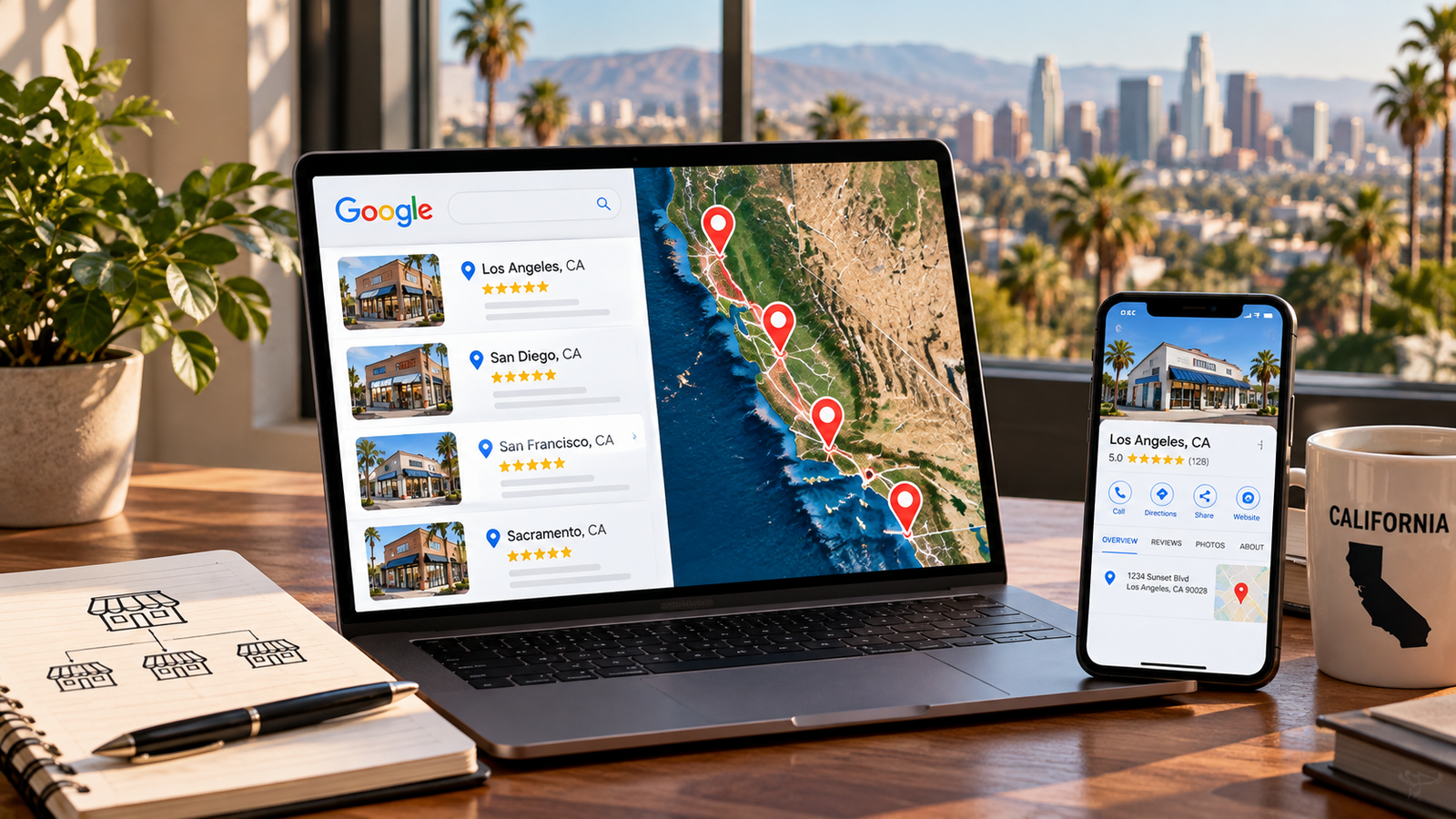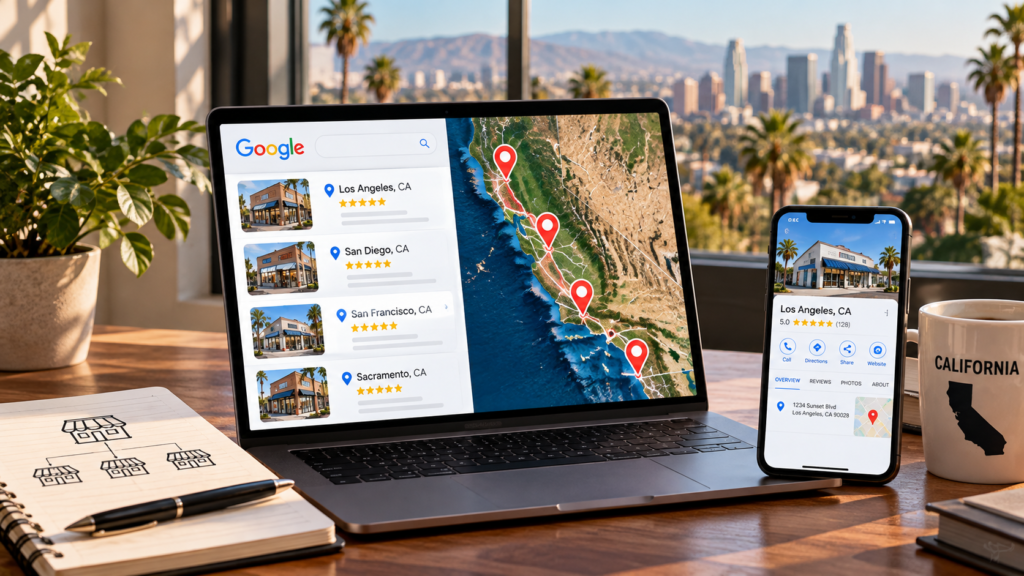


Here’s something most California business owners don’t realize until they’re staring at a competitor’s listing sitting above theirs: local SEO in California doesn’t work the same way everywhere in the state. What gets a plumber to the top of the map pack in Sacramento might barely move the needle in Los Angeles. What works for a boutique in San Francisco could be a complete waste of budget in San Diego.
California isn’t one market. It’s at least six or seven different ones, each with its own competitive intensity, customer behavior, and search patterns, all stacked under the same state flag.
If you’ve been applying generic “local SEO tips” written for a national audience, that’s probably part of why your rankings haven’t moved. This guide breaks down what local SEO actually looks like, city by city, across California’s biggest markets and gives you a clear path to ranking #1 wherever your business operates.
Why Local SEO Matters More Than Ever in 2026
Before we get into the city breakdowns, let’s set the stage with what’s actually happening in search right now.
Local intent now dominates Google. In 2026, nearly half of all Google searches carry local intent up sharply from just a few years ago. That’s not a small shift. It means that for most California businesses, “ranking well” and “ranking well locally” are now functionally the same goal.
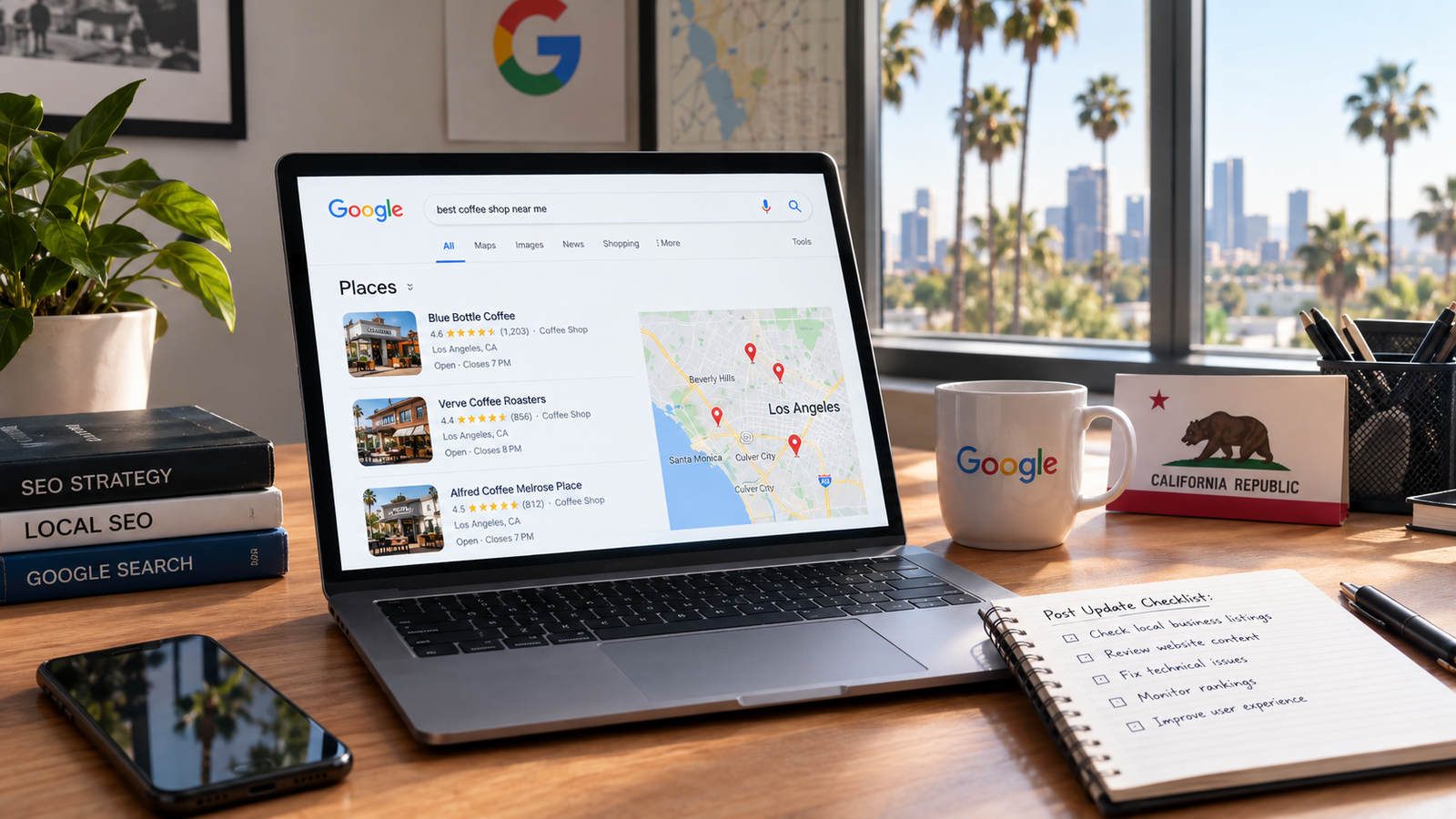
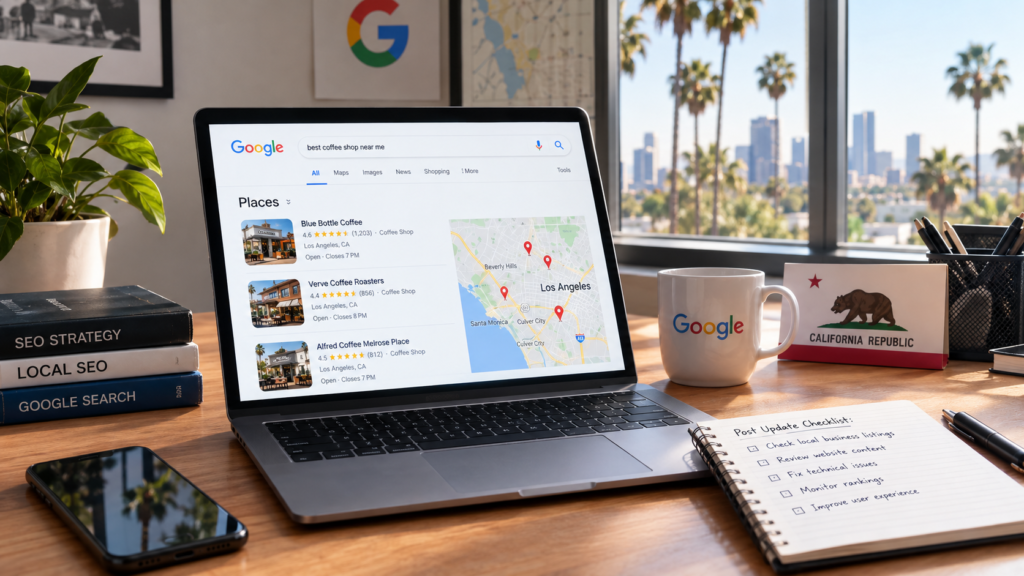
And the local pack of those three map listings that show up above the regular search results is where the action is. Searchers click on map pack results at a much higher rate than standard organic listings, and businesses that land in those top three spots see dramatically more calls, clicks, and visits than businesses sitting just below them.
Here’s the part that should grab your attention: most California small businesses haven’t claimed this opportunity yet. A large share of small businesses don’t have a fully optimized Google Business Profile, and a majority have inconsistent name, address, and phone number information across the directories that matter. That’s not a footnote, it’s a wide-open door for any business willing to walk through it.
Los Angeles: The Most Competitive Market in California
Los Angeles County is home to well over a million registered businesses, the largest concentration anywhere in the state, across legal, healthcare, entertainment, real estate, and retail. If your business operates in LA, you’re not just competing with the shop down the street. You’re competing in one of the most saturated digital markets in the country.
What this means for your local SEO strategy: generic content won’t cut it. Neighborhood-level targeting is essential. “SEO for businesses in Los Angeles” is a battlefield. “SEO for personal injury attorneys in Koreatown” or “best dentist near Silver Lake” is where smaller and mid-sized businesses can actually carve out visibility.
The other thing LA businesses consistently underinvest in is review velocity. With this much competition, a business sitting at 15 reviews is invisible next to a competitor with 200. In LA, review generation isn’t a nice-to-have table stakes.
LA local SEO priorities: neighborhood-specific landing pages, aggressive review acquisition, and hyper-local content (think “near [neighborhood]” rather than just “near me”).
San Francisco: Small Footprint, High Stakes
San Francisco has more small businesses per capita than almost anywhere else in California — but the city itself is geographically tiny. That combination creates a unique dynamic: intense competition packed into a small number of neighborhoods, with a customer base that is unusually online-savvy and price-insensitive compared to the rest of the state.
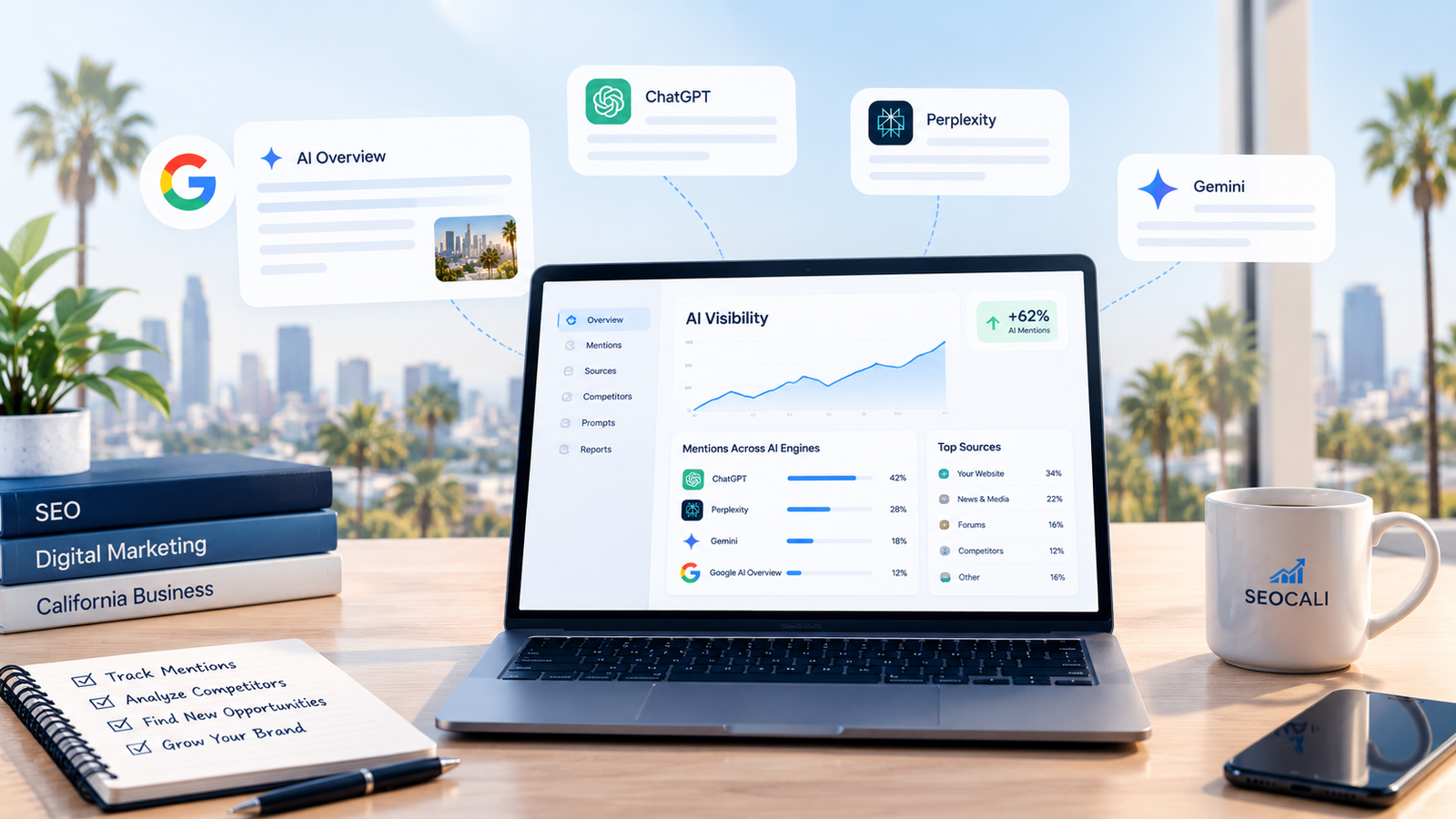
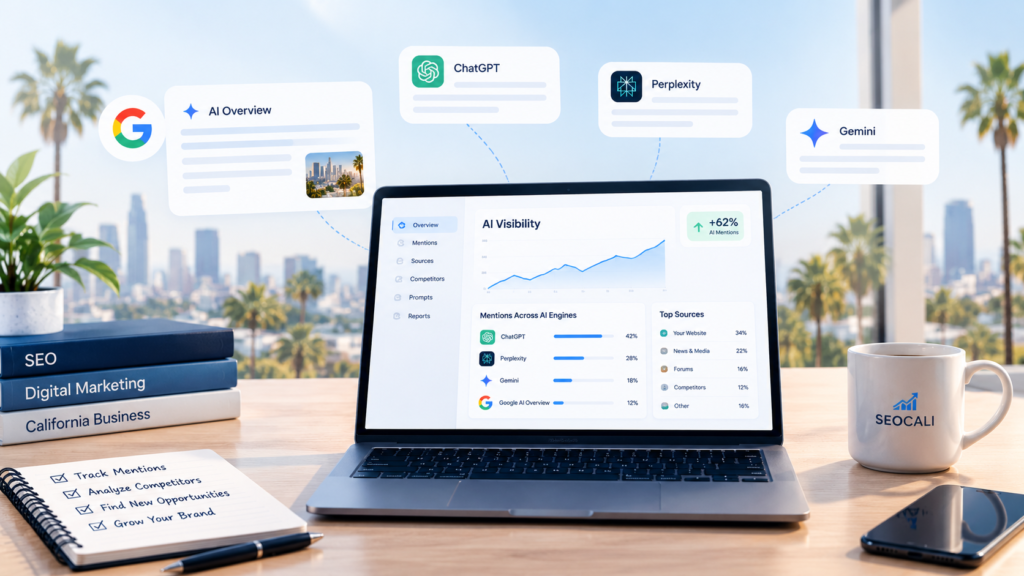
San Francisco searchers also skew heavily toward mobile and increasingly toward AI search tools – ChatGPT, Perplexity, and Gemini usage in the Bay Area outpaces the state average by a wide margin. If your San Francisco business hasn’t thought about how it shows up when someone asks an AI assistant for a recommendation, you’re already behind a meaningful share of your local market.
SF local SEO priorities: mobile page speed (non-negotiable in this market), AI visibility (GEO) alongside traditional local SEO, and positioning around the specific neighborhood or corridor your business serves — SoMa, the Mission, Hayes Valley, and the Financial District all behave like distinct micro-markets.
San Diego: Booming, But Still Underserved Digitally
San Diego County has roughly a quarter-million registered businesses — a huge market, but one where digital sophistication often lags behind LA and the Bay Area, especially among service-based businesses like contractors, healthcare providers, and local retailers.
That gap is an opportunity. In San Diego, a business that simply does the fundamentals well — a complete and active Google Business Profile, consistent citations, a handful of strong local backlinks, and genuinely helpful local content — can often outrank competitors who haven’t touched their listings in years.
San Diego’s growth corridors (North County, Chula Vista, the East County suburbs) are also expanding fast, which means search volume for “[service] near me” queries in those areas is growing too, often faster than the competition can keep up.
San Diego local SEO priorities: Google Business Profile completeness (this alone often outperforms competitors), local citation cleanup, and getting ahead of growth-corridor search volume before competitors catch on.
Sacramento: The Quiet Opportunity Market
Sacramento County has around 32,000 small businesses — a fraction of LA’s footprint — spanning professional services, medical offices, and local franchises. It’s also the seat of California’s state government, which creates a steady stream of local searches tied to legal, accounting, and government-adjacent services that don’t exist in the same way in other markets.
Competition here is real but manageable. Many Sacramento businesses are still running on outdated websites with minimal local content, which means a business that invests properly in local SEO can move up rankings noticeably faster than in LA or San Francisco.
Sacramento local SEO priorities: capitalizing on lower competition with consistent content output, targeting government-adjacent service queries where relevant, and building local backlinks from Sacramento-based publications and directories — which carry more weight here precisely because fewer competitors are pursuing them.
Orange County & The Inland Empire: Franchise Territory
Orange County has over 100,000 registered businesses, with particularly heavy concentrations of franchises, law firms, and healthcare providers, and the Inland Empire (Riverside and San Bernardino) is following a similar pattern as the region grows.
The challenge here is different: you’re often competing not just against other local businesses, but against well-funded national franchise locations that have corporate SEO teams behind them. Standing out requires leaning hard into what a local, independent business can offer that a franchise can’t — genuine local reviews, community involvement, and content that speaks to the specific cities (Irvine, Anaheim, Riverside, Ontario) rather than the broader region.
OC/Inland Empire local SEO priorities: city-specific (not just “Orange County”) content and citations, differentiation messaging against franchise competitors, and review management that highlights local, personal service.
The One Thing Every California Market Has in Common
Regardless of which California city your business operates in, the data points to the same starting place: your Google Business Profile.
Google Business Profile signals are the single largest factor in local pack rankings — bigger than reviews, bigger than backlinks, bigger than on-page content. A complete, active, regularly-updated profile generates dramatically more clicks than an incomplete one. And yet across California, a large share of small businesses either don’t have a profile at all or haven’t fully optimized the one they have.
Before investing in anything else — before building new pages, before chasing backlinks — make sure your Google Business Profile is complete: accurate categories, full business description, regularly updated photos, posts, and a steady stream of fresh reviews with responses.
It’s the highest-return, lowest-cost local SEO action available to any California business, in any city.
Building Your City-Specific Local SEO Plan
Here’s how to put this all together for your business:
- Identify your real competitive radius. In LA or SF, that might be a single neighborhood. In Sacramento or San Diego’s growth corridors, it might be a whole suburb.
- Audit your Google Business Profile against the local pack leaders in your specific area — not generic “best practices,” but what’s actually ranking for your exact category and location right now.
- Build location-specific content that reflects how people in your city actually search — the language, the neighborhoods, the local landmarks they reference.
- Prioritize based on your market’s gaps. In competitive markets like LA and SF, that often means reviews and content depth. In emerging markets like San Diego and Sacramento, it often means simply being more complete and consistent than competitors who haven’t bothered.
California local SEO isn’t about following a national playbook and hoping it translates. It’s about understanding that “local” means something different in every one of these cities — and building a strategy around what your specific market actually rewards.
Frequently Asked Questions
Q1: Which California city is the hardest for local SEO?
Los Angeles, by a wide margin. With well over a million registered businesses across legal, healthcare, retail, and entertainment, LA has more competition for local search visibility than any other California market — and most other major U.S. cities, for that matter. The businesses that win in LA are the ones that go hyper-local, targeting specific neighborhoods rather than the city as a whole, and that treat review generation as an ongoing, structured process rather than something they handle occasionally. San Francisco is a close second in terms of difficulty, mainly because of how digitally sophisticated the customer base is, even though the geographic footprint is much smaller.
Q2: Is it worth doing local SEO in a smaller California market like Sacramento?
It’s often easier to see results faster in markets like Sacramento precisely because competition is lighter. Many businesses in mid-sized California markets are still operating with outdated websites, incomplete Google Business Profiles, and minimal local content. That means a business that does the fundamentals properly: a complete profile, consistent citations, locally relevant content, and a steady review strategy can often move up rankings more quickly than a similar business would in Los Angeles or San Francisco, where every competitor is already fighting hard for the same spots.
Q3: What’s the single most important local SEO factor across all California cities?
Your Google Business Profile. Across every market — LA, SF, San Diego, Sacramento, Orange County — Google Business Profile signals make up the largest single category of local pack ranking factors, ahead of reviews, links, and on-page content combined. A complete, regularly updated profile with accurate categories, photos, posts, and an active flow of reviews consistently outperforms an incomplete one, regardless of city. If you only have time or budget for one thing this quarter, this is it.
Q4: How does AI search (ChatGPT, Perplexity, Gemini) change local SEO for California businesses?
It adds a new layer on top of traditional local SEO rather than replacing it. AI assistants pull recommendations partly from the same signals that drive Google rankings — reviews, business information consistency, and online reputation — but they’re notably inconsistent right now in how accurately they reflect a business’s actual contact details compared to its Google Business Profile. This is especially relevant in markets like San Francisco, where AI search adoption is higher than the state average. Businesses that keep their information consistent across Google, their website, and major directories are better positioned as AI search becomes a bigger source of local discovery.
Q5: Should my California business target city-wide keywords or neighborhood-specific keywords?
It depends entirely on your market and your service radius. In large, dense markets like Los Angeles and San Francisco, neighborhood-specific targeting almost always outperforms city-wide targeting. “Personal injury lawyer in Koreatown” faces far less competition than “personal injury lawyer in Los Angeles,” and it matches how people in those cities actually search and think about location. In smaller or more spread-out markets like Sacramento or the Inland Empire, city-wide or even county-wide targeting can still work well, especially if your service area genuinely covers that broader region. The right approach is to map your actual service radius first, then target accordingly, don’t guess.
Not sure how your business stacks up in your specific California market? Get a free, city-specific local SEO audit from SEOCALI — we’ll show you exactly where you stand against the local competitors who matter, delivered in 48 hours.
Get My Free Local SEO Audit