
A client called us last spring, genuinely confused. His rankings were fine. Traffic was down 30%. Nothing had changed on the site, no penalty, no algorithm drama in the forums.
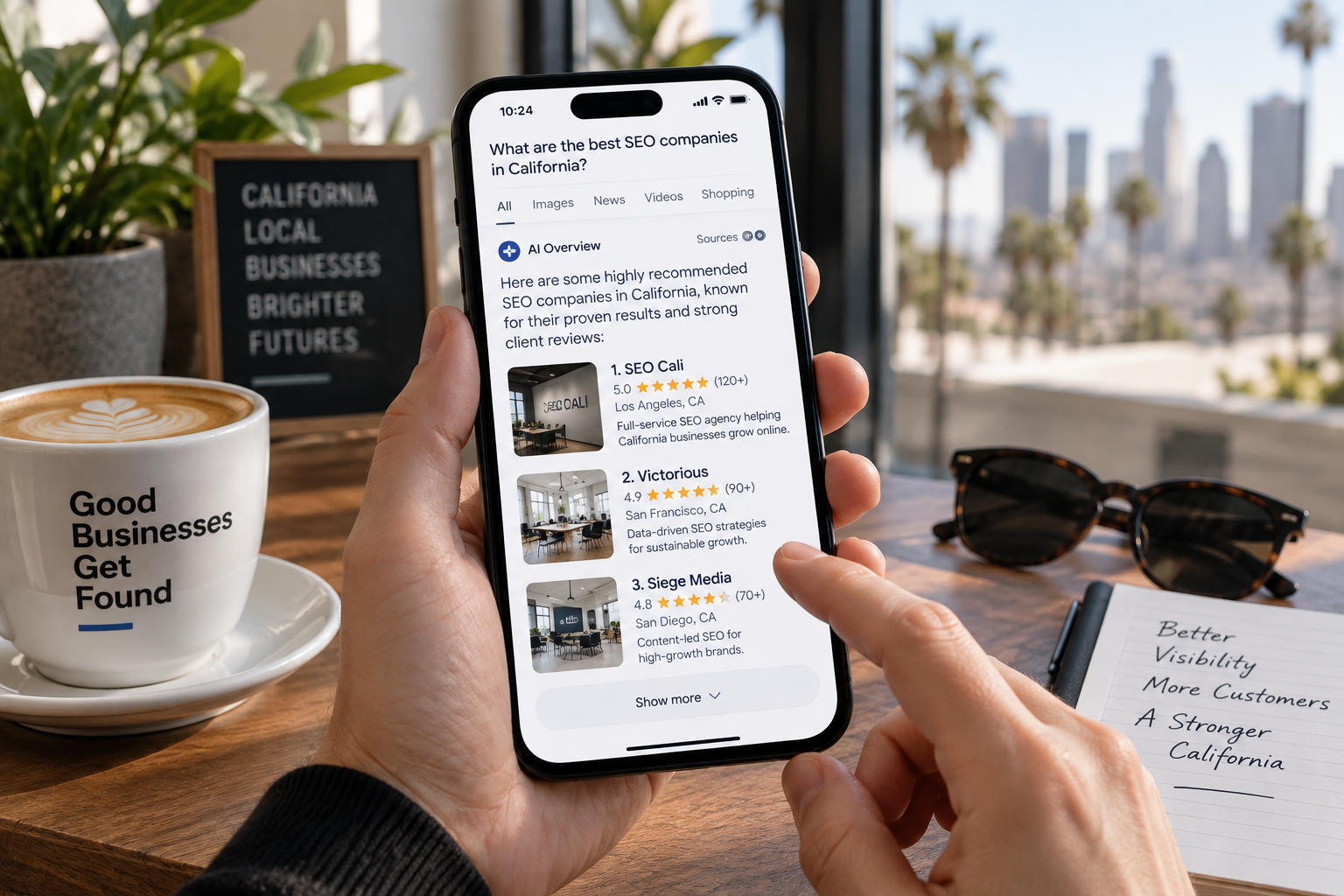
We ran his top queries through ChatGPT and Google’s AI Mode. His competitor showed up in nearly every answer. He showed up in none.
That’s the gap most California businesses are sitting in right now. Your Google rankings can look healthy while your actual visibility quietly leaks away to answers you never see. Tracking AI search rankings is how you catch it before it costs you a quarter.
Why AI Search Rankings Work Differently
Traditional rank tracking asks a simple question: where does my page sit for this keyword? Position 3, position 8, position 40. Clean and repeatable.
AI search doesn’t work that way. Someone asks ChatGPT “who’s the best personal injury lawyer in San Francisco” and gets a paragraph naming three firms. There’s no position 7. You’re either in the answer or you’re invisible.
A few things make this harder than it looks:
- The same prompt gives different answers. Run it twice and you might get two different lists. One check tells you almost nothing.
- Every engine pulls from different places. You can be everywhere in Perplexity and nowhere in ChatGPT.
- Most sessions end without a click. Industry reporting through 2026 puts the share of AI Mode sessions ending with no click at around 93%. The mention itself is the impression.
- Position inside the answer barely matters. Being named second instead of fourth isn’t a meaningful signal. Being named at all is.
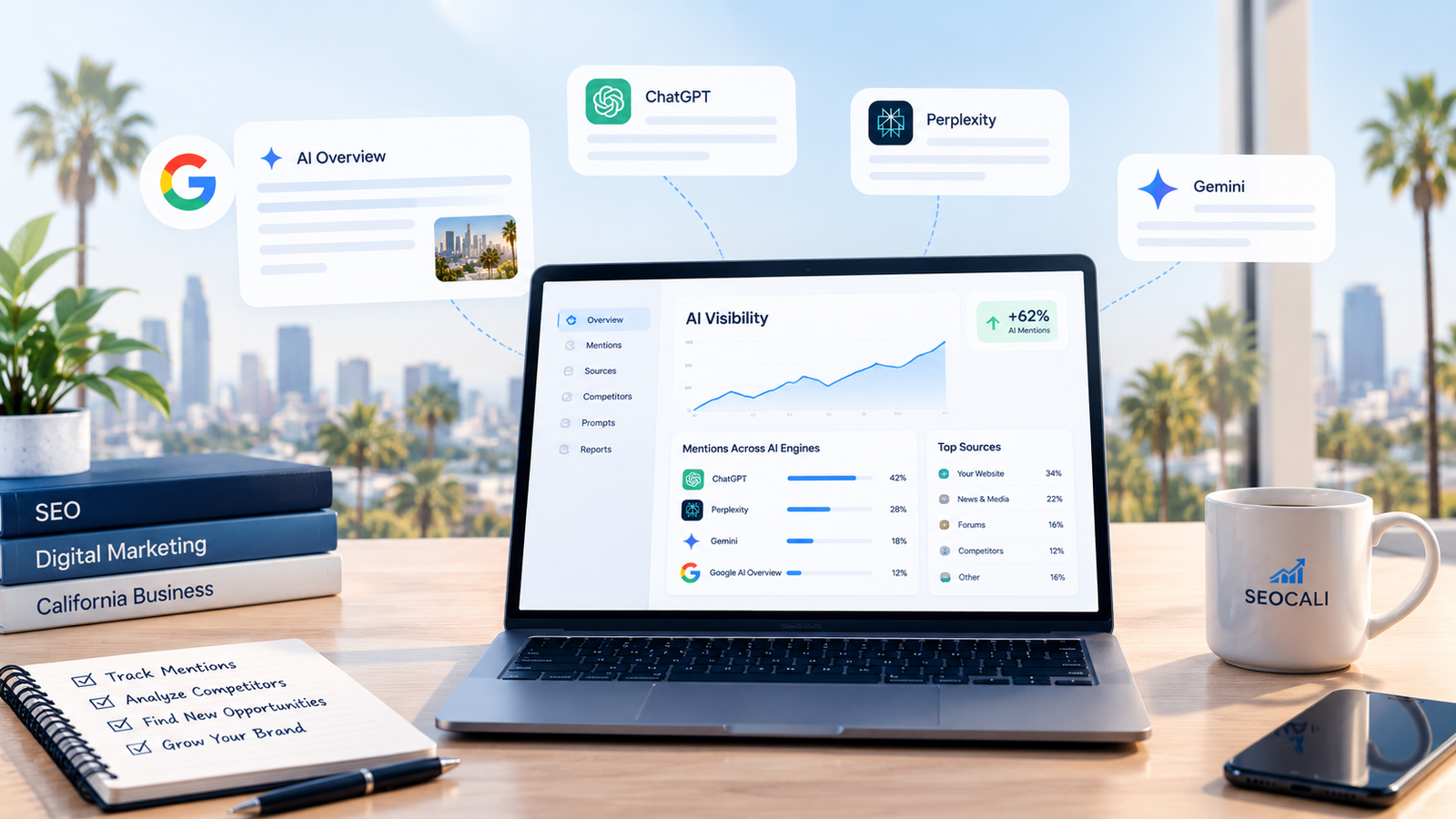
So the metric changes. Instead of “what rank am I,” you’re asking “out of 100 relevant questions, how often does my brand come up.” That’s your AI search visibility rate, and it’s the number worth watching.
Start With a Manual Baseline
Before you buy any tool, spend an afternoon doing this by hand. It costs nothing and it tells you whether you even have a problem.
Build your prompt list
Write out 25 to 40 questions a real customer would type. Not keywords. Full questions.
- “Best dentist in Sacramento that takes new patients”
- “How much does a personal injury lawyer charge in Los Angeles”
- “Top Shopify SEO agencies in California”
- “Who should I hire to fix my Google Maps ranking”
Mix them up. Some looking for a vendor, some comparing options, some just researching. That spread matters because engines behave differently at each stage.
Run them and log what happens
Test each prompt across ChatGPT, Perplexity, Gemini, Claude, and Google AI Overviews. Run each one three to five times, since answers vary. In a spreadsheet, record:
- Did your brand get mentioned, yes or no
- Which competitors got named instead
- Which websites the engine cited as sources
- Whether the description of your business was accurate
That last column surprises people. We regularly find engines quoting old pricing, closed locations, or services a business dropped two years ago.
After a couple of hours you’ll have a directional baseline. Say you appear in 18 of 120 runs. That’s a 15% visibility rate, and now you have something to improve.
Move to Automated LLM Rank Tracking
Manual checks work once. They don’t work monthly, and they don’t scale past a few dozen prompts.
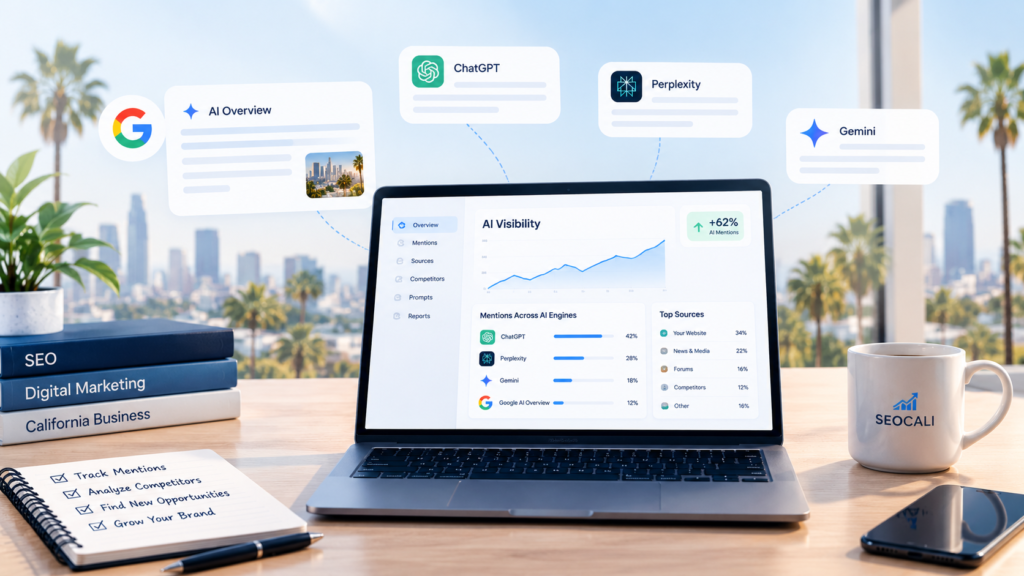
Automated GEO tracking platforms run your prompt set across multiple engines on a schedule, log every response, and score the results. The category has grown fast, and the names you’ll run into in 2026 include Semrush One, Profound, Otterly, Peec AI, Evertune, and Ahrefs Brand Radar. Prices swing wildly, from around $30 a month for a basic dashboard up into enterprise territory.
What actually matters when you pick one:
- Multi-engine coverage. Tracking only ChatGPT gives you a quarter of the picture.
- Citation tracking. You need the source URLs the engine pulled from, not just a mention count.
- Competitor benchmarking. Your 30% means little until you know your rival sits at 65%.
- Sentiment. Getting mentioned as the expensive option is different from getting mentioned as the reliable one.
- Analytics connection. Some platforms tie AI referrals to sessions and conversions. That’s the part your accountant cares about.
Whatever you choose, keep the prompt list stable. Changing prompts every month makes your trend line meaningless.
How to Track Competitor Rankings in AI Search Results
This is where the real strategy lives, and most people skip it.
When a competitor gets named and you don’t, the engine tells you why. Look at the sources it cited. Nine times out of ten you’ll find the same few things:
- A comparison or “best of” listicle on a third-party site that includes them and not you
- A Reddit thread or forum discussion mentioning their name
- Their own page that answers the exact question directly, in plain language
- Local press coverage or an industry directory profile
Build a simple sheet. Column one, the prompt. Column two, which competitors appeared. Column three, every source URL cited. Sort by how often each source shows up.
The domains that keep repeating are your target list. Getting listed on a roundup that three engines pull from does more for your AI search rankings than a month of blog posts nobody cites.
What Strategies Improve Brand Visibility in AI Search Engines
Once you know where you stand, here’s what moves the number. This is the same framework we run for California clients across law, dental, real estate, and eCommerce.
Answer questions directly on the page
Engines lift passages that answer a question cleanly in two or three sentences. Put the answer right under the heading, then explain. Burying it in paragraph six means it never gets quoted.
Get mentioned where engines already look
Third-party mentions carry more weight here than links do. Aim for industry roundups, local California publications, chamber and association directories, podcast appearances, and genuine participation in communities like Reddit where your industry gets discussed.
Build real author authority
E-E-A-T isn’t a slogan for AI search, it’s the filter. Put named authors on your content with real credentials, bar numbers, license numbers, years in practice. Engines favor sources they can verify.
Keep your facts consistent everywhere
If your site says 15 years in business and your Google profile says 8, the engine has no reason to trust either. Audit your name, address, phone, hours, services, and pricing across every place they appear.
Use structured data properly
LocalBusiness, Organization, FAQPage, and Person schema give machines clean facts to read instead of guesses to make.
Publish comparison content yourself
“X vs Y” and “best options in [city]” pages get cited constantly, because that’s exactly the shape of the question people ask AI tools.
Set a Reporting Rhythm
Check monthly, not daily. AI answers fluctuate enough that weekly data mostly shows noise.
Each month, track your visibility rate per engine, your share of voice against three to five named competitors, new domains that started citing you, and any factual errors that need correcting. Then tie it to reality: AI referral sessions in Google Analytics, and leads that came from them.
We fold AI visibility reporting into every SEOCALI campaign alongside keyword rankings and organic traffic, because the two move together. Businesses that clean up their profiles, earn real reviews, and publish content people cite are the same ones AI engines end up quoting.
Find Out Where Your Brand Stands
Most California businesses have never checked whether AI tools mention them. A fair number find out the hard way, when the phone gets quiet.
Request your free 47-point SEO audit from SEOCALI. We’ll show you where you sit in AI answers, which competitors are getting named instead, and what it takes to change that. Delivered in 12 hours, no commitment, no sales pitch. We’re a California-only team, working month to month since 2011, and you can see how we approach this on our AI SEO services page.
Frequently Asked Questions
1. How do I check if ChatGPT mentions my business?
Open ChatGPT and ask it the questions your customers would ask, like “best roofing company in Anaheim” or “who does Shopify SEO in California.” Run each question three to five times, because responses vary between sessions. Log whether your name appears, which competitors show up, and which sources get cited. Do this across Perplexity and Gemini too, since a strong showing in one engine says nothing about the others. Twenty-five prompts run properly gives you a usable baseline in an afternoon.
2. What is GEO tracking and how is it different from SEO tracking?
GEO stands for generative engine optimization, and GEO tracking measures whether AI engines mention and cite your brand in their answers. Traditional SEO tracking measures where your pages rank in a list of blue links. The difference is practical: SEO tracking reports a position number, GEO tracking reports a visibility rate, meaning the percentage of relevant prompts where your brand appears. Both matter in 2026, and they usually improve together, because AI engines pull heavily from sources that already rank well.
3. Which AI search visibility tool should a small business use?
Start free by testing manually before spending anything. If you decide to automate, entry-level platforms run roughly $30 to $100 a month and cover the main engines with basic reporting, which is enough for most single-location businesses. Bigger names like Semrush One and Profound cost considerably more and make sense when you’re tracking hundreds of prompts across multiple locations or managing several brands. Check that whichever tool you pick reports source citations, not just mention counts.
4. How often should I track AI search rankings?
Monthly works for most businesses. AI answers vary enough between runs that daily or weekly checks mostly show noise rather than real movement. Track more often during an active campaign, right after publishing significant content, or if you spot a sudden drop in AI referral traffic in Google Analytics. Keep the same prompt list every cycle, or your trend data won’t mean anything.
5. Why does my brand appear in Perplexity but not ChatGPT?
Because they source information differently. Perplexity crawls the live web and cites current pages, so fresh, well-structured content can surface quickly. ChatGPT blends training data with live browsing, which means older, more established mentions carry more weight and new content takes longer to register. If you’re strong in Perplexity and weak in ChatGPT, you usually need more third-party mentions and longer-standing authority signals rather than more blog posts.
6. Does AI citation tracking actually help my Google rankings?
Not directly, but the work behind it does. Improving AI citations means earning third-party mentions, publishing content that clearly answers questions, tightening your structured data, and building author credibility. Every one of those also supports traditional rankings. In our campaigns, clients who invest in AI visibility typically see organic rankings improve alongside it, because both systems reward the same underlying signals of trust and clarity.
7. How do I fix wrong information about my business in AI answers?
Track the source first. Ask the engine where its information came from, or check the citations in the response. Usually the error traces back to an outdated directory listing, an old press mention, or a stale page on your own site. Correct it at the source, update your Google Business Profile and schema markup, then publish clear current information on your own site. Expect a few weeks to a few months before engines refresh, since they don’t update instantly.
8. How many prompts should I track for reliable data?
Twenty-five to forty prompts run three to five times each gives you a solid starting picture, roughly 100 to 200 data points. That’s enough to see clear patterns without becoming a full-time job. Larger businesses covering multiple services or cities usually track 100 to 300 prompts through an automated platform. What matters more than volume is that your prompts reflect how customers actually phrase things, not how you’d write a keyword.
9. Can I improve AI search visibility without a big content budget?
Yes, and the cheapest wins usually come first. Fix your Google Business Profile, make your facts consistent everywhere online, add proper schema, and rewrite your existing service pages so each one answers its main question in the first few lines. After that, focus on getting mentioned in industry roundups and local California publications, which costs outreach time rather than production money. Volume publishing is the expensive route and rarely the fastest one.
10. How long does it take to see AI visibility improve?
Perplexity and other live-crawling engines can pick up changes within a few weeks. ChatGPT and Gemini generally take longer, often two to four months, because they lean on established sources and periodic data refreshes. Fixing factual errors tends to move fastest. Building genuine visibility from a standing start takes a quarter or two of consistent work, which is the same timeline traditional SEO has always run on.