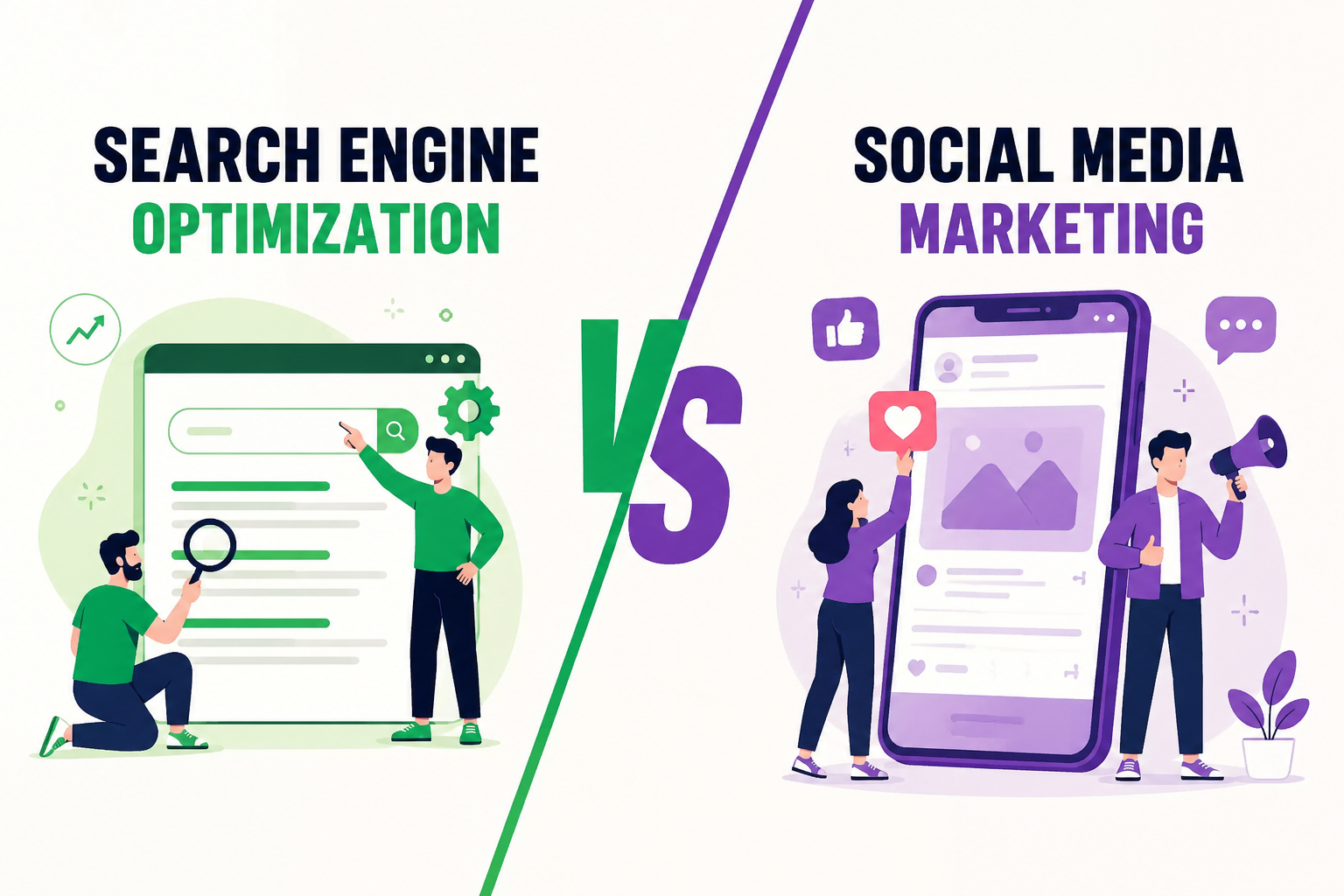

Every California business owner asking this question deserves a straight answer, not a “it depends” that leaves them more confused than when they started. So here it is upfront: in most cases, SEO delivers a stronger long-term return, Google Ads delivers faster short-term results, and the businesses winning the most consistently in 2026 are using both together, strategically.
But that one-line answer skips a lot. Because the right choice for a personal injury law firm in Los Angeles is completely different from the right choice for a new Shopify brand launching in San Diego. And in California, where you’re competing in some of the most expensive paid advertising markets in the country, getting this decision wrong doesn’t just waste money. It can set your business back by a year or more.
This guide breaks down exactly how both channels work, what they cost in California’s key industries, what the ROI data actually says in 2026, and how to figure out which one — or which combination — makes sense for where your business is right now.
What Google Ads Actually Does (And What It Doesn’t)
Google Ads is a paid advertising platform. You bid on search terms, your ad appears at the top of the results page when someone searches that term, and you pay every time someone clicks. Stop paying, stop appearing. It’s that clean.
The appeal is obvious: visibility is almost immediate. A well-set-up Google Ads campaign can start driving traffic to your website within hours of launch. For a California business that needs leads this month — a new dental practice that just opened in Irvine, a contractor launching in the East Bay, a law firm that just brought on two new associates — that speed matters enormously.
But there are two things Google Ads can’t do for you. It can’t build equity. Every dollar you spend on ads produces traffic while the campaign runs, but nothing happens the moment it stops. And it can’t build trust in the same way organic rankings do. California consumers, particularly in tech-saturated markets like San Francisco and LA, have become increasingly good at recognizing and skipping paid ads. Position one in organic search earns around 39.8% of clicks. The top-paid ad averages just 2.1%. That’s not a small difference.
What SEO Actually Does (And What It Doesn’t)
SEO is the process of earning organic rankings on Google, the non-paid results that appear below the ads and in the local map pack. You don’t pay per click. Once you rank, the traffic is essentially free. And unlike paid ads, rankings don’t disappear the moment you stop writing a check.
The compounding effect is real and significant. A service page or blog post that earns a strong ranking this year can generate leads for two, three, or five years at essentially no additional cost per visitor. One benchmark study found a median SEO ROI of 748% over three years, compared to roughly 200% for Google Ads over the same period. SEO typically crosses over and begins outperforming paid ads at around the six-to-nine-month mark for well-run campaigns.
The tradeoff is time. SEO takes months to produce meaningful results. Four to six months is a realistic minimum in most California markets before significant ranking improvements appear — and in competitive markets like Los Angeles or San Francisco, the timeline can stretch longer depending on the category and how strong your competitors’ SEO foundations are.
So SEO is not the answer if you need leads next week. It is almost always the answer if you’re thinking about where your business needs to be twelve months from now.
What Google Ads Cost in California’s Key Industries
One of the most important things to understand about Google Ads in California is that you’re paying California prices, which means significantly more than national averages for most competitive categories.
California businesses in legal, healthcare, and real estate are operating in the most expensive paid search markets in the country. Here’s what the 2026 data shows across the industries SEOCALI serves most:
Legal (Personal Injury, Family Law, Criminal Defense): Attorneys and legal services have the highest average cost-per-click of any industry at $9.87 per click in 2026 — and that’s the national average. In Los Angeles, “personal injury lawyer” keywords can exceed $100 per click for premium placements. The average cost per lead in legal is $131.63. A California law firm running a competitive Google Ads campaign in a major market can easily spend $10,000–$30,000 per month just in ad spend, before management fees.
Dental: Dentists and dental services average $8.00 per click nationally, with California metro markets typically sitting higher. Cost per lead for dental averages in the range of $60–$120, depending on the service. For a dental practice in Los Angeles or the Bay Area, meaningful ad visibility in competitive implant or cosmetic dentistry categories requires substantial ongoing investment.
Real Estate: Real estate saw the biggest year-over-year cost-per-click increase of any industry in 2026, up over 27%. Cost per lead runs around $102.51. For a real estate agent or broker trying to generate buyer or seller leads through paid search in California’s major markets, the economics can be brutal without tight campaign management.
eCommerce and Retail: Ad costs vary widely depending on category, but the broader picture is clear: Google Ads costs have risen across 87% of industries year-over-year, and the trend is continuing. For California Shopify brands competing in fashion, beauty, health, and home goods, paid customer acquisition costs are rising while organic search — for those who’ve invested in it — stays free.
The ROI Comparison: Short-Term vs Long-Term
Here’s the clearest way to think about the financial difference between these two channels.
Google Ads is renting a property. You get immediate access. Customers can find you right away. But the moment you stop paying rent, you’re out. You build no equity, no compounding asset, no organic presence that persists after the check stops.
SEO is buying a property. It requires more upfront investment and takes longer to deliver returns. But once you own it, it works for you continuously — and the value compounds over time rather than resetting to zero when you pause spending.
After six to twelve months of well-executed SEO, a California business can be generating 100+ organic clicks per day that would have cost $500 to $1,500 per day in ad spend to replicate. Over a two-year horizon, SEO becomes five to ten times more cost-effective than Google Ads for most businesses.
There’s one more data point worth noting. Organic leads convert at approximately 2.4%, compared to roughly 1.3% for paid leads. The person who found your business through an organic result — especially one where you appeared as the authoritative answer to their question — arrives with more trust than someone who clicked an ad. That trust gap translates directly into conversion rates and close rates.
When Google Ads Is the Right Choice
None of the above means Google Ads is wrong. There are specific situations where it’s clearly the stronger short-term play, and California businesses should know what they are.
You just launched or recently relocated. A brand new business or one entering a new California market has no domain authority, no existing rankings, and no organic traffic base. SEO will eventually work — but it won’t work this month. Google Ads gets you in front of buyers immediately while you build your organic foundation.
You’re promoting something time-sensitive. A seasonal offer, a new service line, an event, or a limited promotion won’t wait for SEO to compound. Paid ads are the right tool for anything with a deadline.
You want to test before committing. Google Ads generates data fast — which keywords convert, which landing pages work, what your actual cost per lead is in your specific California market. Running ads first and using that data to inform your SEO keyword strategy is a smart sequencing play.
Your competitors are already dominating organically. If a handful of established California competitors own page one for your most valuable keywords and have years of domain authority behind them, paid ads can keep you competitive while you build the organic presence needed to eventually challenge them.
When SEO Is the Right Choice
You’re in a high-CPC industry. If you’re a California attorney, dentist, or real estate professional, the math on paid ads is brutal — especially in major markets. A single new client from organic search can represent thousands of dollars in revenue. Building the organic rankings that generate those clients at no per-click cost is an enormously better long-term investment than continuously paying $9.87+ per click for the same traffic.
You’re building for the next two to five years. If your goal is to own your market rather than rent visibility in it, SEO is the only channel that builds a compounding, durable asset. Every piece of content, every earned backlink, every technical improvement compounds — building authority that becomes increasingly hard for competitors to displace.
You’re trying to win the AI search layer, too. Google Ads has no presence in ChatGPT, Perplexity, or Gemini. Paid ads don’t appear in AI Overviews. The only way to show up in those surfaces — which California customers are using at a fast-growing rate — is through the content authority and trust signals that SEO builds. In 2026, investing in SEO is also investing in your visibility across the entire search landscape, not just Google’s paid placements.
Your competitors aren’t investing in content. In many California markets — especially service businesses in Sacramento, the Inland Empire, and San Diego’s growth corridors — competitors are relying heavily on ads and doing minimal content or technical SEO work. That’s a gap a smart competitor can exploit quickly, building organic rankings that will continue paying dividends long after everyone else is still paying per click.
The Honest Answer for Most California Businesses: Both, Sequenced Smartly
For established California businesses with a reasonable marketing budget, the most effective approach isn’t choosing between Google Ads and SEO — it’s running them in a deliberate sequence.
In the first three to six months, Google Ads carries the load. It generates leads immediately, produces the conversion data you need to refine your strategy, and keeps the business growing while SEO builds in the background.
As SEO rankings mature — typically from month six onward — the organic channel starts delivering leads at dramatically lower cost. At that point, you can begin pulling back on the most expensive ad campaigns for keywords you’re now ranking organically for, and redirect that budget toward new markets, new services, or higher-funnel awareness campaigns.
Over a twelve-to-twenty-four-month horizon, this sequenced approach typically produces more total leads at a lower blended cost per acquisition than either channel running alone. The ads fill the gap while SEO builds. The SEO reduces the long-term dependency on ad spend. And together, they cover both Google’s traditional results and — through the content and authority that SEO builds — the AI search surfaces that paid ads can never touch.
If the budget is genuinely constrained and you can only choose one, choose Google Ads if you need leads this month. Choose SEO if you can invest over the next six to twelve months and want something that will still be working for you in five years.
California is one of the most competitive business environments anywhere in the country. The businesses that dominate their local markets here aren’t the ones that found the cheapest way to get clicks. They’re the ones that built something durable — and then used paid ads to accelerate it.
Frequently Asked Questions
Q1: How much should a California business budget for Google Ads vs SEO?
For Google Ads, meaningful visibility in California’s competitive categories starts at $1,500–$3,000 per month in ad spend in mid-sized markets, and $5,000–$15,000+ per month in major metro markets like Los Angeles or San Francisco for competitive categories like legal, dental, or real estate. Below those thresholds, budget constraints often prevent your ads from showing consistently enough to gather meaningful data or generate reliable lead volume. For SEO, a quality full-service engagement typically runs $1,500–$5,000 per month depending on market competitiveness and scope. The critical difference: your ad budget disappears when you stop, while your SEO investment builds equity that compounds. Many California businesses find the most efficient allocation is roughly 60/40 ads-to-SEO early on, gradually shifting toward 30/70 or 20/80 as organic rankings mature.
Q2: Can Google Ads hurt my SEO rankings?
No — running Google Ads has no direct positive or negative effect on your organic SEO rankings. Google keeps the two systems entirely separate. There is an indirect benefit: ads can drive traffic to pages, and if those visits result in positive engagement signals (time on page, low bounce rate, conversions), that engagement data may influence how Google evaluates your pages. But the relationship isn’t direct, and running or pausing ads will not move your organic rankings either way.
Q3: My California business has been running Google Ads for two years. Should I switch to SEO?
Not switch — add. Two years of Google Ads data is actually a significant asset: you know which keywords convert, what your cost per lead is, and which landing pages perform. That’s exactly the data you need to build an efficient SEO strategy — target the keywords your ads have proven to drive real business, and build the organic rankings that will let you capture that traffic at a fraction of the cost per click. The goal isn’t to eliminate your Google Ads spend. It’s to reduce your dependency on it over time by building organic rankings that deliver the same leads without the per-click cost.
Q4: How do I know if my California Google Ads campaign is actually performing well?
The most important metric is cost per lead (CPL) relative to the lifetime value of a customer in your category. Industry averages in 2026 run $131.63 per lead for legal services, $102.51 for real estate, and around $60–$120 for dental — but these are national averages, and California markets typically run higher. The more important question is: what is a new customer worth to your business, and is your current CPL low enough to produce a positive return? If you’re tracking traffic and clicks but not leads and conversions, you’re measuring the wrong things. Impressions and clicks are inputs. Leads, calls, and revenue are outputs — and those are the only numbers that tell you whether your ads are actually working.
Q5: Will AI search tools like ChatGPT and Perplexity affect whether I should use Google Ads or SEO?
Yes, and this is one of the most important shifts in California’s search landscape in 2026. AI tools like ChatGPT, Perplexity, and Google Gemini are increasingly part of how California consumers research purchases, compare services, and find local businesses — and Google Ads have zero presence in those platforms. Paid ads live entirely within Google’s own ecosystem. SEO, on the other hand — specifically the content authority, brand mentions, and structured data signals that a strong SEO strategy builds — is exactly what AI platforms use to form recommendations. Investing in SEO is also investing in your visibility across AI search. Investing only in Google Ads leaves you completely invisible in the AI search layer, which is growing fastest among exactly the high-intent, research-driven customers that California’s most valuable industries — legal, healthcare, real estate, financial services — depend on.
Not sure which channel makes more sense for your specific California market and business? Get a free SEO and Google Ads strategy assessment from SEOCALI — we’ll tell you exactly where your biggest opportunity is, delivered in 48 hours, no obligation.
Get My Free Strategy Assessment →
About SEOCALI: California’s only SEO agency built exclusively for local businesses. Since 2011, we’ve helped 250+ California businesses across 30+ industries — from law firms and dental practices to Shopify brands and real estate teams — build organic search presence that compounds over time and reduces long-term dependency on paid ads. White-hat only. Month-to-month. No lock-in contracts, ever.